The Re-Pricing of Place, Part II
.avif)
This essay is the second in a three-part series examining how technology, geopolitics and human experience are reshaping the global map of value. Part I — The Re-Pricing of Place — is available on the NT Realty blog. Part III — The Nature Premium — is forthcoming.
Sometime in the past two years, a new kind of buyer began appearing on the Boka Bay.
In the first article in this series, I argued that the global map of value is being quietly redrawn — not because geography has changed, but because the world's interpretation of it has. On Montenegro's coast, that shift is beginning to show up in the behaviour of buyers. The speculator Montenegro attracted in the years after independence — drawn by the obvious gap between frontier pricing and Mediterranean fundamentals — has largely given way to the lifestyle buyer, the one who found these waters for long summers and sailing seasons. But the buyer who has been appearing more recently is a different proposition: quieter about their reasons, less interested in rental yields or beach proximity, and when you press them about why they are buying, the answer comes back in some version of the same phrase.
Just in case.
Key Takeaways
- A third wave of internationally mobile buyers is treating property in stable, well-positioned jurisdictions as optionality — the right to act if circumstances require it — rather than as pure investment or lifestyle
- Geopolitical disruption in locations previously considered insulated from risk, including the Gulf region, has accelerated this behavioural shift among internationally mobile families and entrepreneurs
- Montenegro sits outside the central strategic calculations of larger powers, offering a form of geographic insulation that is becoming more economically relevant as global uncertainty rises
- EU accession progress — with 14 of 33 chapters now provisionally closed — is strengthening Montenegro's institutional framework and long-term credibility for international buyers
- Premium Boka Bay coastal stock remains structurally constrained by geography, planning limitations and finite shoreline, concentrating any demand shift into a limited inventory pool
Three Waves
The buyers who have arrived in Montenegro over the past two decades have come in waves, each wanting something different.
In the early-to-mid 2000s — I arrived in 2005, the year before independence — the conversation was almost entirely about price arbitrage. Coastal real estate here cost a fraction of what comparable property commanded along the Croatian coast. The gap was plain. Buy early, wait for convergence.
By the mid-2010s that psychology had changed. The speculative wave receded and what replaced it was calmer and more considered. Buyers were still international — British, German, Russian, increasingly American and Australian — but the motivation had shifted toward lifestyle. A second home. A summer base. Somewhere to slow down without disconnecting from the wider world.
What has emerged more recently is something harder to categorise. These buyers are not necessarily planning to relocate immediately. Many have successful businesses or careers in London, New York, Dubai. The conversation still touches on sailing seasons and schools, but there is a different layer underneath — a quiet acknowledgement that the world has become harder to read. Right now we are in active conversation with families from Dubai, some still weighing options along the bay, others who have already made the decision to move. Not because they are abandoning Dubai permanently, but because the calculation has changed. That phrase — Plan B — gained currency after COVID, when internationally mobile buyers first looked seriously at smaller, calmer jurisdictions as a form of insurance. The language faded when things stabilised. It is back, and this time it is being acted on rather than discussed. The purchase is no longer simply about investment or lifestyle. It is about optionality — real estate that could become more important if circumstances require it.
Geography Shapes Destiny
In Prisoners of Geography, Tim Marshall argues that physical landscape shapes geopolitics more powerfully than ideology, culture or individual leadership. Mountains stay where they are. The choices available to any country's leaders are constrained, often decisively, by the terrain they inherited.
Marshall's argument is primarily about the constraints geography places on powerful nations — Russia's obsession with buffer states, China's aggression in the South China Sea, the strategic logic running beneath decisions that appear ideological but are really geographical. But that argument contains an insight that cuts the other way. If geography imprisons the great powers, forcing their decisions and creating their vulnerabilities, then it also confers a different kind of freedom on countries that sit outside the central strategic calculations of larger powers — nations too modest in scale and resource to register as a serious prize. For those countries, geography is not a prison. It is a form of insulation.
The Two-Sided Shift
For most of the past half-century, the map of global stability felt almost fixed. Certain cities functioned as unquestioned anchors for wealth and international life — London, New York, Singapore, Dubai, Tel Aviv — not merely as economic centres but as operating systems for the globally mobile, places where property ownership, legal systems, banking infrastructure and daily life appeared fundamentally reliable. Those cities remain enormously powerful. But assumptions about their insulation have become less absolute.
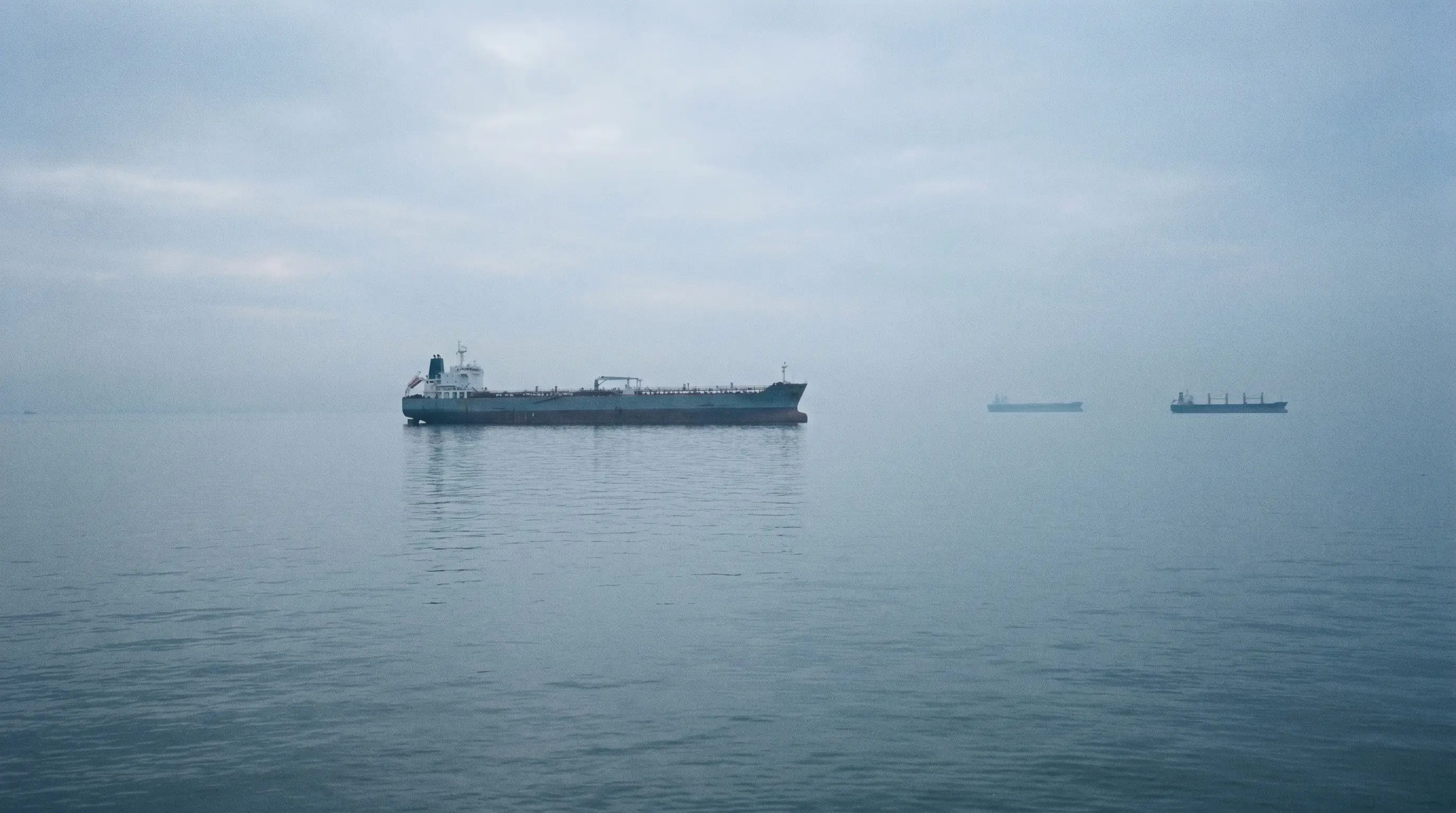
Tel Aviv has been operating within the rhythms of an ongoing regional war for over a year. Dubai — long the Gulf's definitive safe haven for international wealth — experienced something it had never planned for when regional conflict engulfed the wider Gulf from late February 2026. Widely reported figures suggest tens of thousands of expatriates left in the first weeks; the UK government issued updated travel guidance for British nationals in the UAE. The Strait of Hormuz, through which roughly a fifth of the world's oil normally passes, has been operating under severe disruption since the conflict began, with reports of around 2,000 ships stranded on either side as the situation remained unresolved into May. The point is not that Dubai has ceased to function. It is that the fundamental assumption governing every expatriate's decision to live there — that the Gulf was simply too wealthy and too interconnected to attract this kind of instability — has been tested in a way that is difficult to walk back.
These are signals rather than catastrophes. What they signal is that the geopolitical risk premium — the discount a market applies to reflect instability — is no longer something confined to recognised conflict zones or emerging markets. It is beginning to apply, quietly, to places that were never supposed to need it.
At the same time, another category of place has begun to look different through the same lens: smaller countries that remain internationally connected without sitting at the centre of anyone else's geopolitical contest. They are increasingly aligned with European legal standards without carrying the strategic exposure of larger markets. They remain close enough to Europe to benefit from its institutional orbit, without being caught in the same crosswinds.
Property as Option
There is a concept in financial markets called optionality — the value of preserving the right to act in the future without being obligated to do so now. A call option on a stock is not an instruction to buy. It is the purchase of flexibility.
A generation ago, preserving optionality in this way was harder. Work, geography and coordination costs tied people more tightly to specific cities. Technology has loosened those constraints — and artificial intelligence looks set to accelerate that shift further. It is not the cause of the behavioural change described in this essay, but it steadily expands the pool of people who are able to act on it.
The third wave of buyers appearing on Montenegro's coast understands this intuitively, even if they rarely use the language. They are not buying because they are leaving London or New York or Dubai tomorrow. They are buying the right to leave if they choose to — a European base, a potential basis for temporary residence, a place that could absorb their family if the political weather worsens somewhere else. For a growing class of internationally mobile buyers, real estate in a stable, well-positioned jurisdiction functions as a hedge against future uncertainty, and the relevant question is not what the rental yield might be but what the option is worth. That value rises as underlying uncertainty rises.
Montenegro as Laboratory
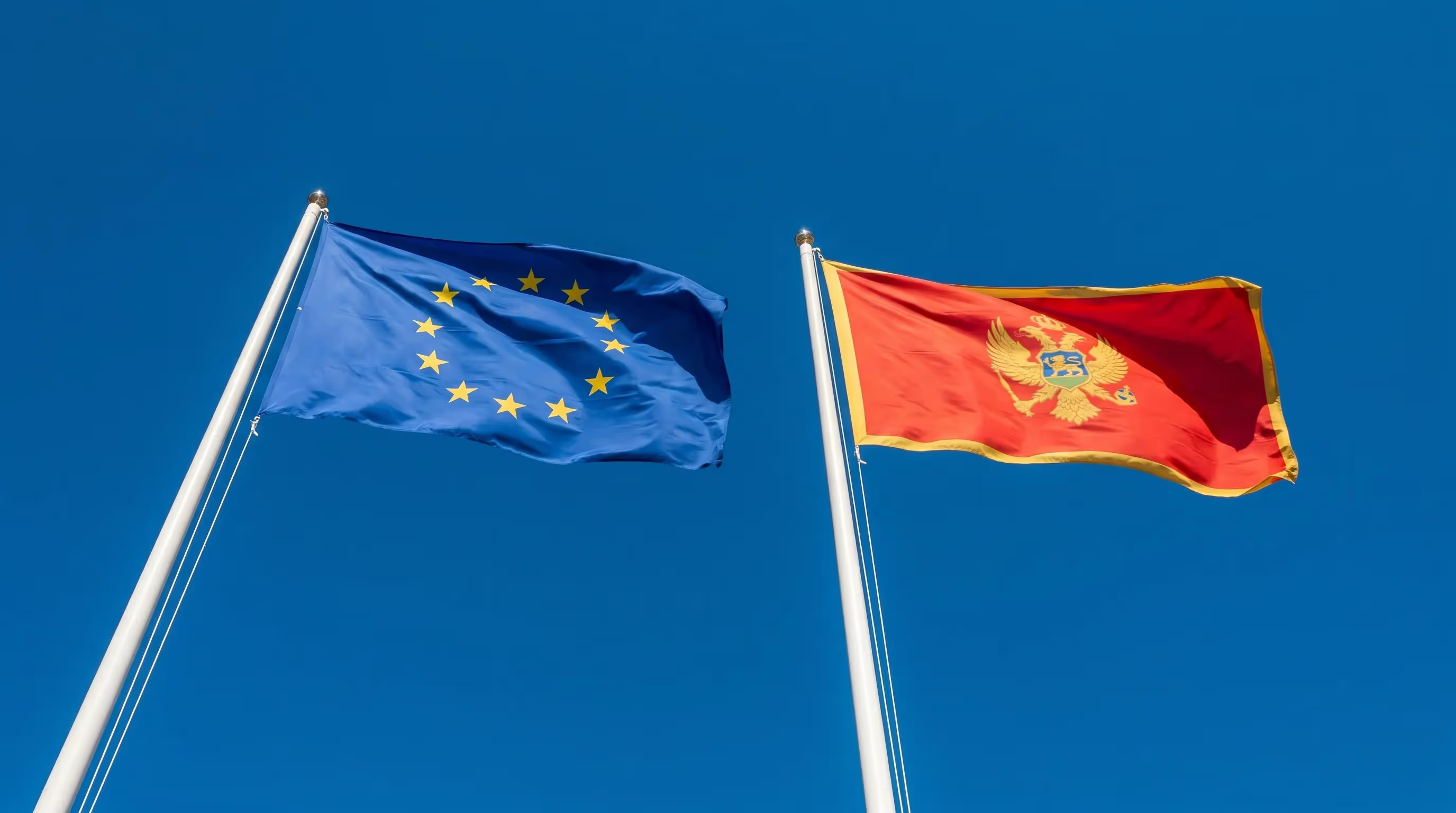
Montenegro sits at an intersection that remains, for now, surprisingly under-recognised. A NATO member state formally negotiating EU accession, with all 33 chapters opened and 14 now provisionally closed, it is widely regarded as the most advanced current candidate in the enlargement process. The Montenegrin government has publicly targeted EU membership by 2028. That direction is credible, even if the exact timing remains uncertain — the hardest chapters, particularly those covering judiciary and fundamental rights, are still among those that matter most.
The country sits on the Adriatic coast between Croatia and Greece, with a population of around 620,000 and no significant resource profile that would draw the strategic attention of outside powers.
Two decades ago its appeal was primarily about price — an undervalued market at the edge of the Mediterranean tourism economy. What is changing is not the geography but the interpretation. The mountains behind Kotor are twenty minutes from the coast. The bay is calm enough to swim before most cities have finished their morning commute. In Tivat, children walk to school past superyachts and fishing boats on the same waterfront, growing up at a scale of life that larger, more strategically exposed places have largely lost — where the absence of geopolitical weight turns out to be among the most valuable things a place can offer.
Buyers who once came for arbitrage or summers are now being joined by buyers who ran a different calculation entirely — one where calm, connectivity and comparative stability intersect — and found themselves looking at Tivat, Luštica, the villages above the bay. The observation is not that Montenegro is perfect. It is that it scores unexpectedly well on the criteria that have recently started to matter most. That raises a further question — what happens when natural environment itself becomes a more serious component of economic value? That is the subject of the third essay.
.webp)
When the Map Changes
Geography is not destiny for buyers any more than it is for states. But when the map of perceived safety begins to shift — when familiar anchors start accumulating risk they were never supposed to carry — the places that were always calm acquire a different kind of significance. None of it was new: the mountains, the coast, the comparative stability that had been quietly building since independence. What changed was the lens through which people looked.
The third wave of buyers showing up on the Boka Bay — quieter than those who came before, less interested in explaining themselves — have already made that adjustment. They are not predicting catastrophe or fleeing anything in particular. They are doing something more deliberate: preserving the right to act if circumstances require it.
Just in case.
Frequently Asked Questions
Why are buyers from Dubai looking at Montenegro?
Regional instability in the Gulf has prompted internationally mobile families and entrepreneurs to reassess long-term plans. Montenegro offers political calm, NATO membership, EU accession momentum, and a European base — making it an increasingly considered option for buyers seeking stability and optionality.
What is property optionality and why does it matter?
Property optionality refers to buying real estate not primarily for investment return or lifestyle, but to preserve the right to relocate if circumstances require it. A growing class of internationally mobile buyers treat property in stable, well-positioned jurisdictions as a hedge against future uncertainty.
Is Montenegro politically stable?
Montenegro has experienced coalition instability since independence, but remains a functioning democracy with NATO membership and an active EU accession process. It sits outside the major geopolitical tensions affecting larger strategic markets.
Is Kotor Bay property a good investment?
Premium Boka Bay coastal property is structurally constrained by geography, planning limitations and finite shoreline. As international awareness of Montenegro grows and EU accession momentum builds, demand from internationally mobile buyers has increased. NT Realty recommends taking independent financial advice before making any property investment decision.
Can I get residency in Montenegro by buying property?
Montenegro offers a property-based temporary residence route for qualifying buyers. Rules changed in January 2026 under the amended Law on Foreigners. NT Realty recommends consulting a qualified Montenegrin lawyer for current eligibility requirements.
How has Montenegro changed since independence in 2006?
Montenegro has adopted the euro, joined NATO in 2017, and significantly developed its tourism and property markets. Tivat and the Bay of Kotor have become internationally recognised destinations. The country is now the most advanced EU accession candidate, targeting membership by 2028.

About the Author
Peter Flynn moved to Montenegro in 2005 and began working in the country's property market as a private speculator. He established New Territory DOO in 2006 to formalise his operations after the country gained independence. With two decades of experience guiding international buyers through Montenegro's property market and residency processes, he specialises in the Tivat and Bay of Kotor area. Working alongside business partner Maša Flynn, NT Realty (which takes its name from the New Territory holding company) has helped hundreds of buyers from the US, UK, Australia, and beyond navigate Montenegro's evolving legal and regulatory landscape. Peter maintains close working relationships with local lawyers, notaries, and government officials, providing clients with current, practical guidance rooted in on-the-ground experience.
In this article
Get luxury real estate updates directly in your inbox.
Are you interested in buying a home? Look no further than working with our real estate experts.

.avif)
.avif)