

Two Bedroom Apartment with Seaview & Garage in Kava, Tivat for Sale
€252,000

Peter Flynn
Features
Explore in 3D
Guided Video Tour
In Brief
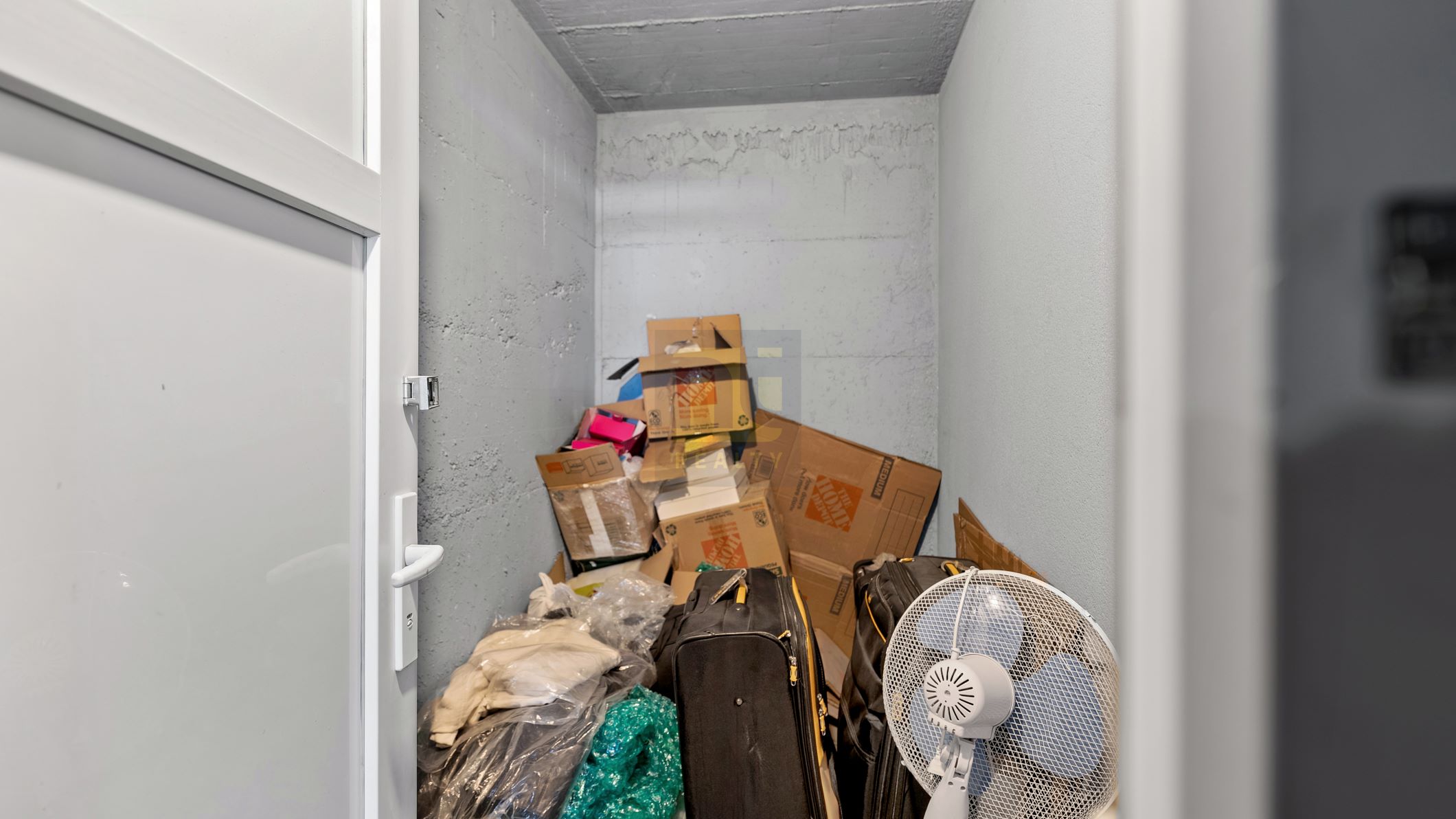
A 69 m² two-bedroom, one-bathroom apartment in Kava, Tivat municipality, on an elevated third-floor position with views over the Island of Flowers, the Island of St Marko, the Luštica peninsula, and across Tivat Bay to the superyachts moored at Porto Montenegro's Jetty One. Fully furnished, with a remote-opening garage space and a separate storage room of around 3 m². The brand new HDL supermarket is a few minutes' walk away, opposite the main bus station, with a pharmacy on the corner of the main road and Wine Empire and Montefish close by. The building has a shared outside area where children play and neighbours barbecue. Kalardovo beach five minutes by car.
Description
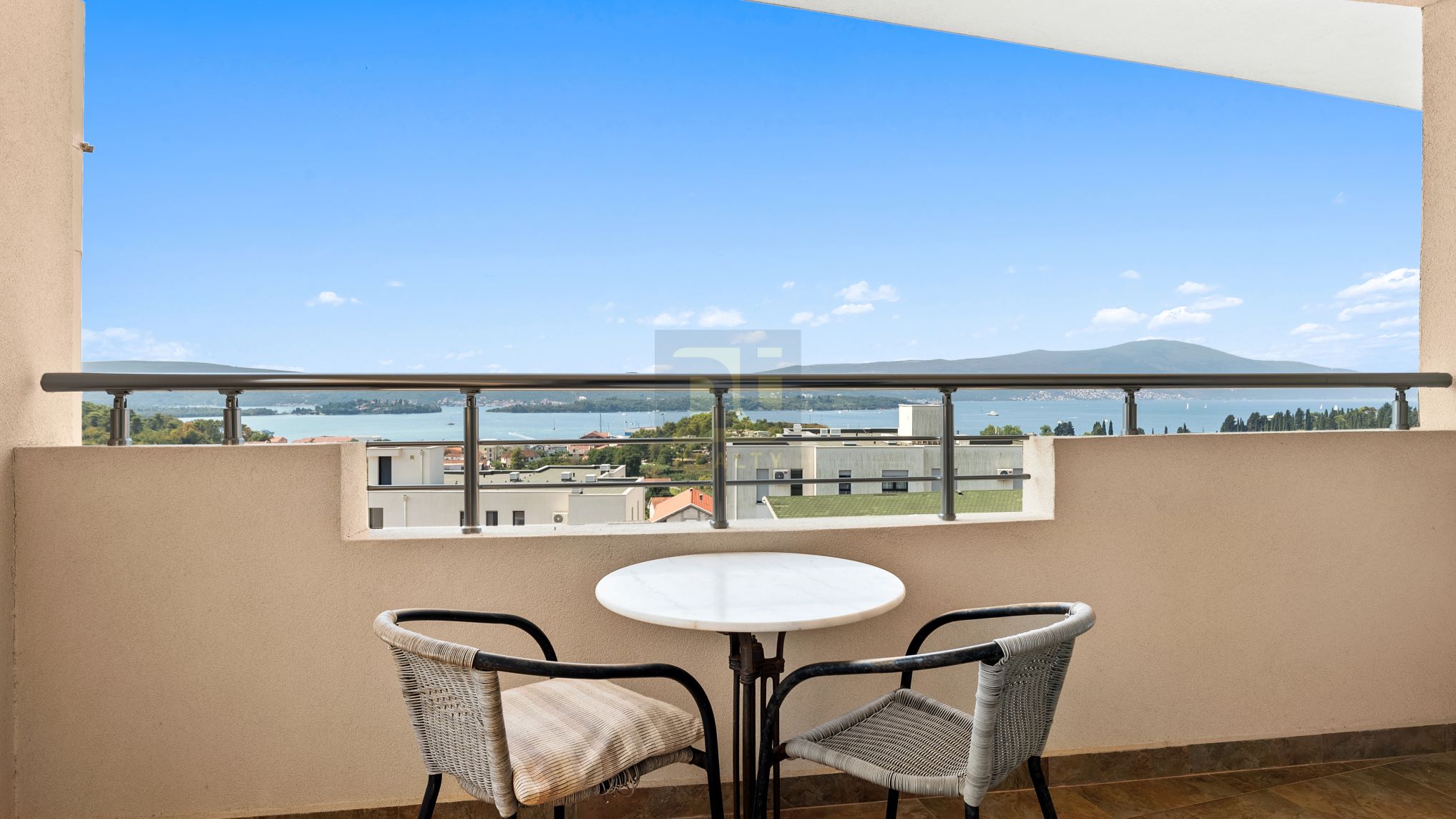
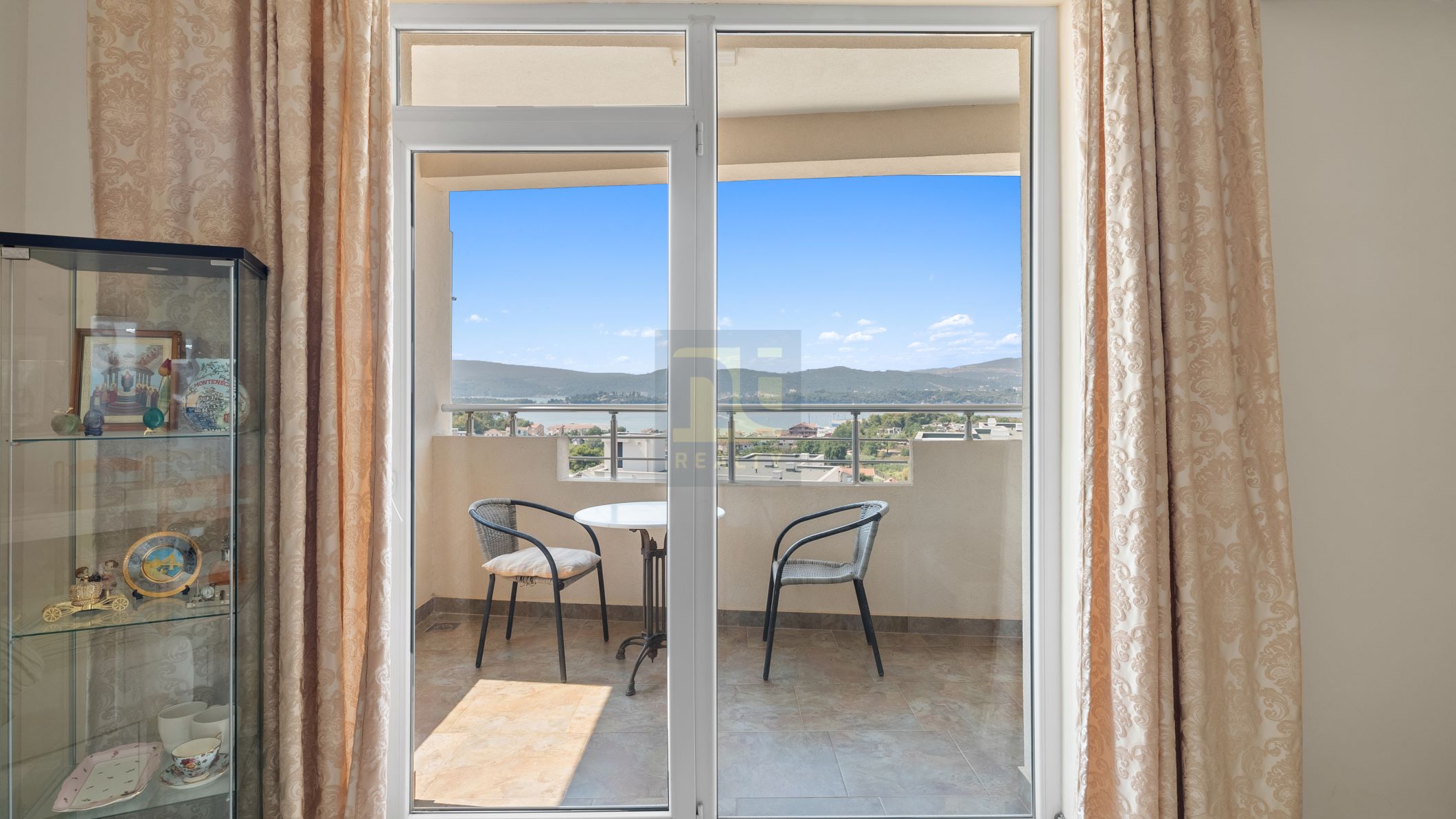
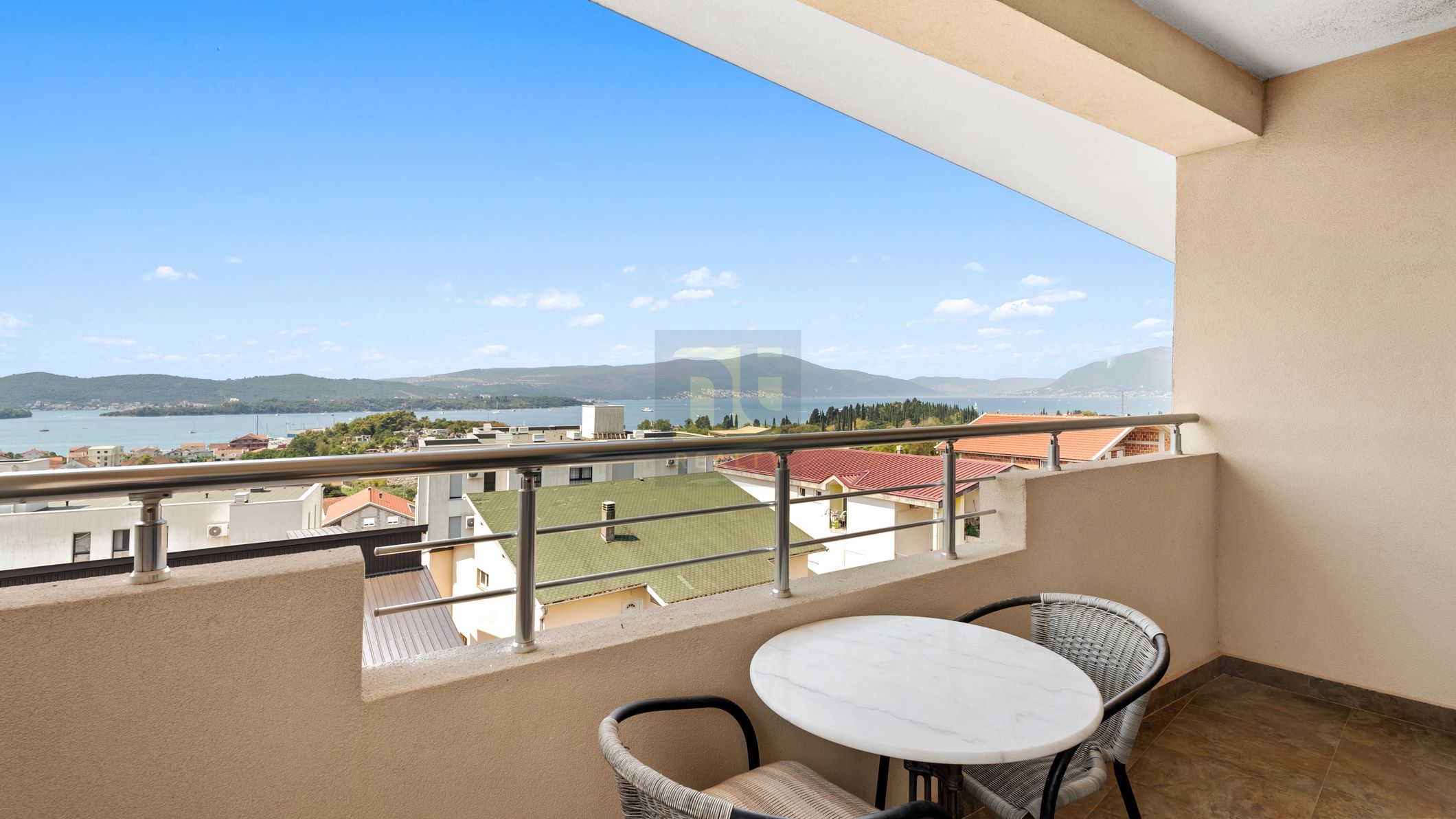
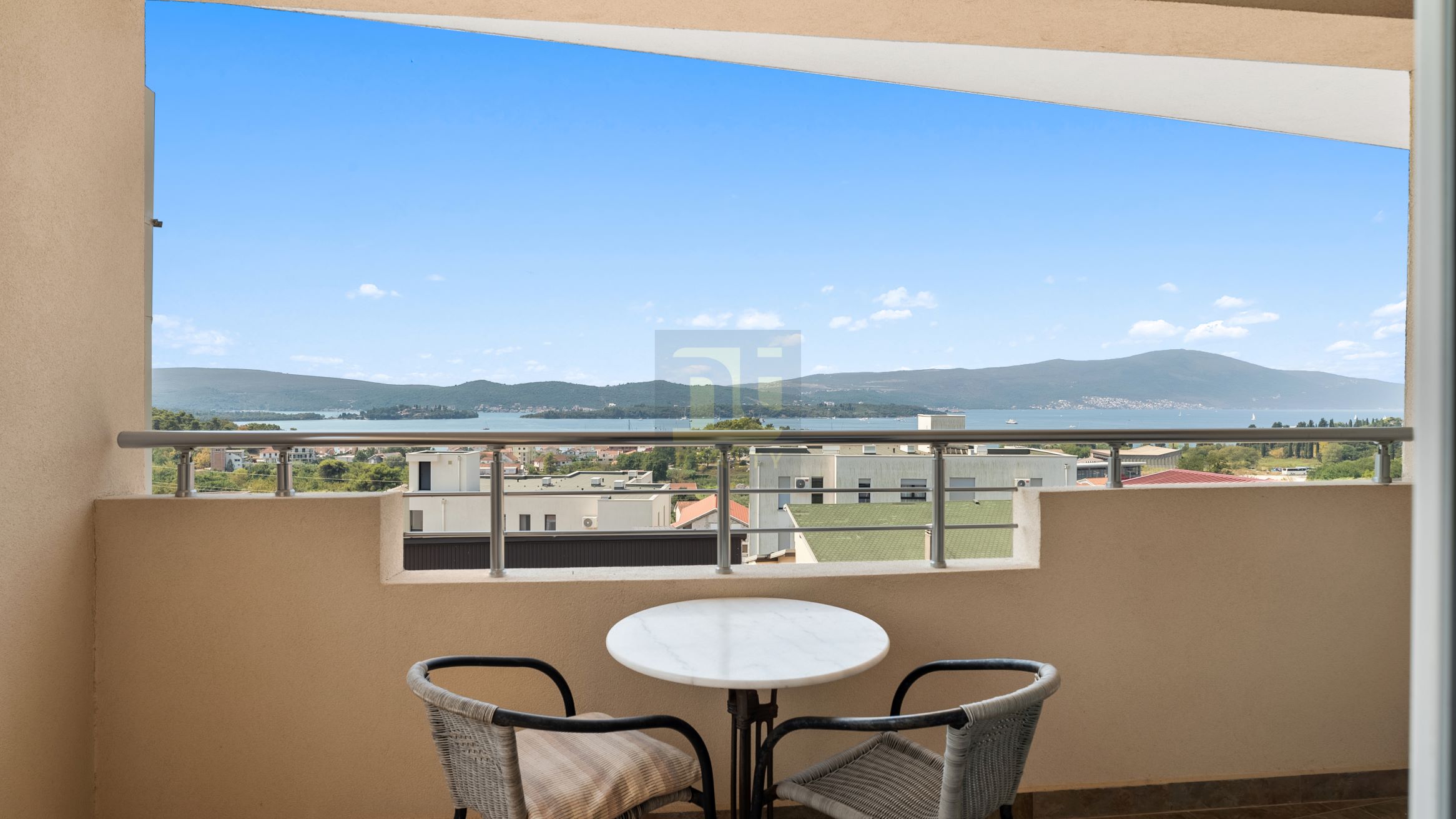
The view is the thing here. From the third floor, over the rooftops of Kava, the water opens out properly — the Island of Flowers and the Island of St Marko sitting in the bay, the Luštica peninsula running off into the distance, and the eye drawn all the way along Tivat Bay to Porto Montenegro, where the superyachts moored at Jetty One can be clearly seen on a clear day. It is not a glimpse of sea between buildings. It is a proper, sit-down-with-a-coffee view, and it is there from the living room, the covered terrace, and both bedrooms.
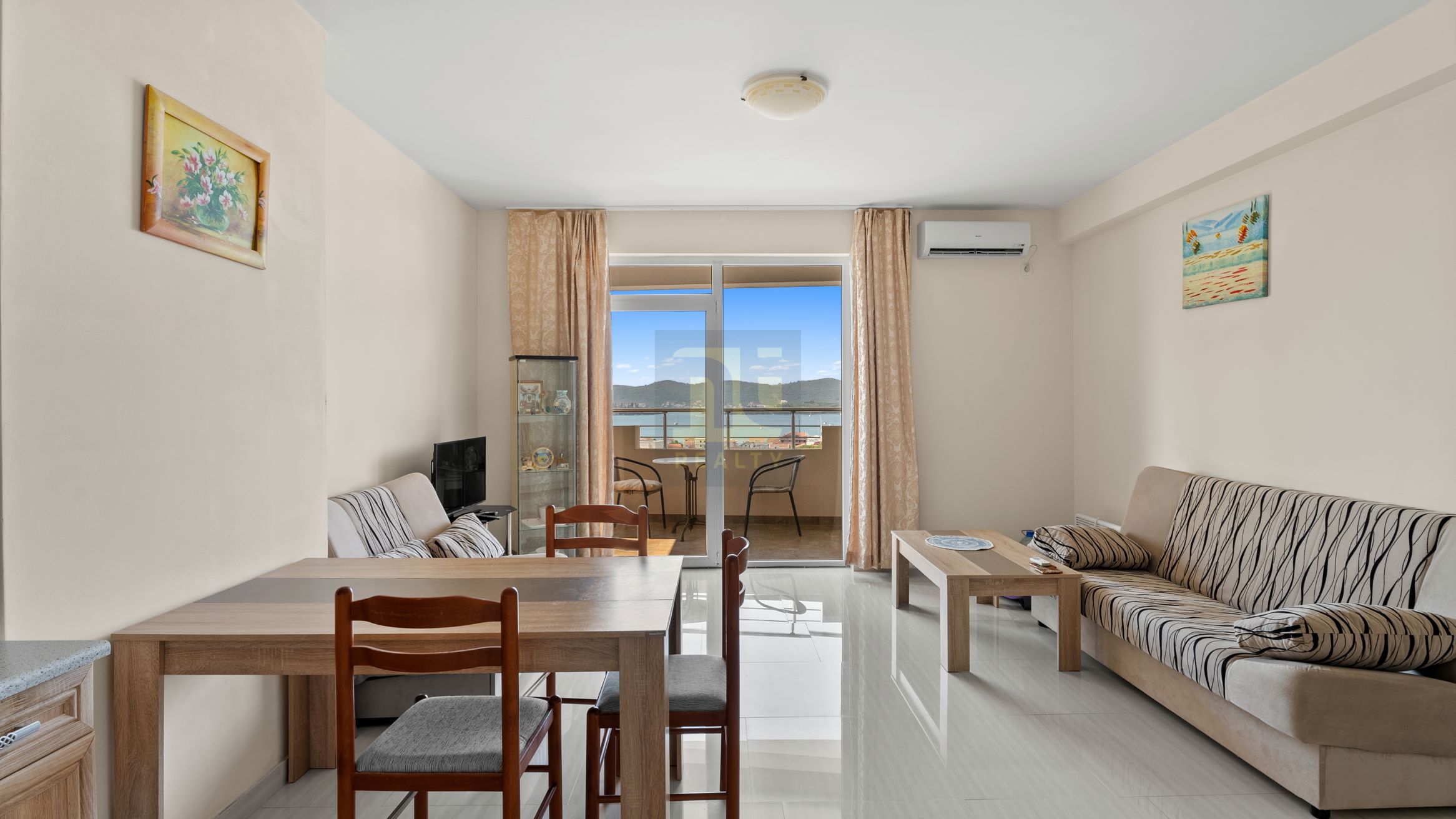
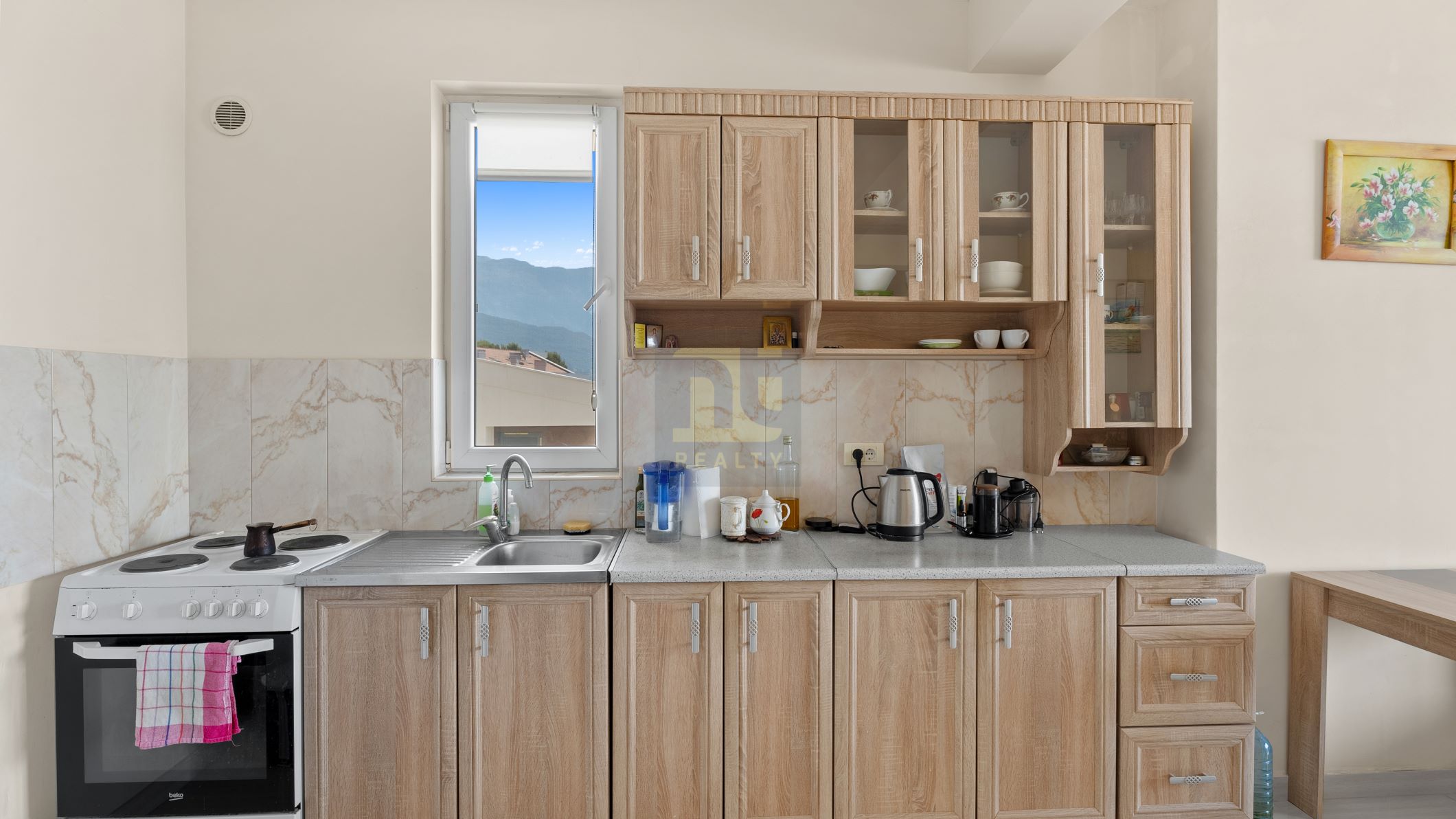
The living and dining room is open-plan, tiled in pale grey, with a dining table for four, a long striped sofa, and glazed doors opening onto the terrace. Air conditioning is fitted, and the room gets the benefit of the same water views that define the rest of the apartment. The kitchen is fitted separately in warm oak-effect cabinetry with glass-fronted display units, a Beko oven, and a window that looks straight out to the hills behind Kava — a nice touch for anyone cooking rather than just looking at the sea.
The terrace itself is covered, which makes it a genuine outdoor room rather than an afterthought — tiled, with space for a bistro table and two chairs, shade in the height of summer, and unobstructed views across the bay. It is the kind of spot that gets used daily: morning coffee, evening drinks, watching the light change over the water.
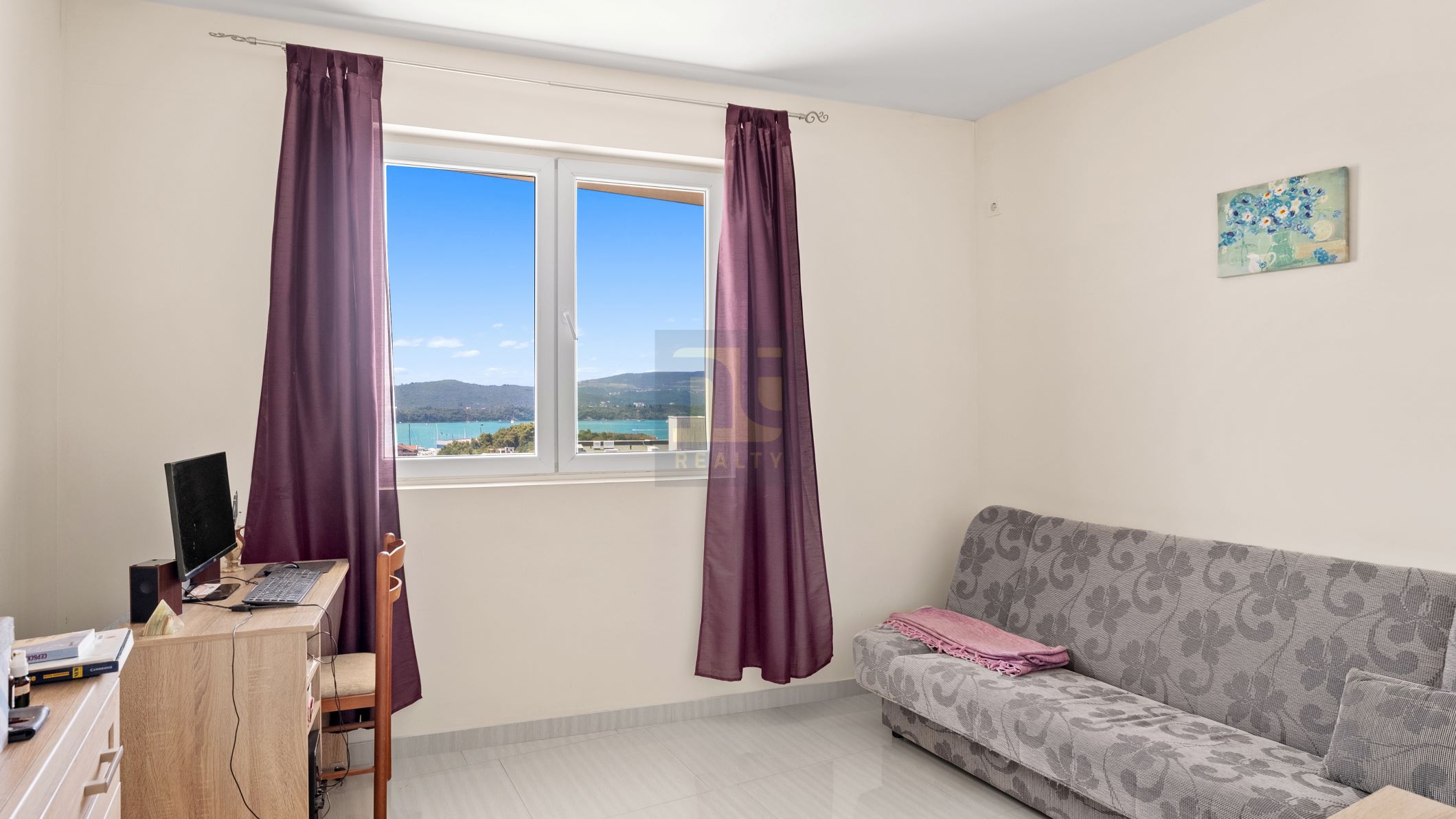
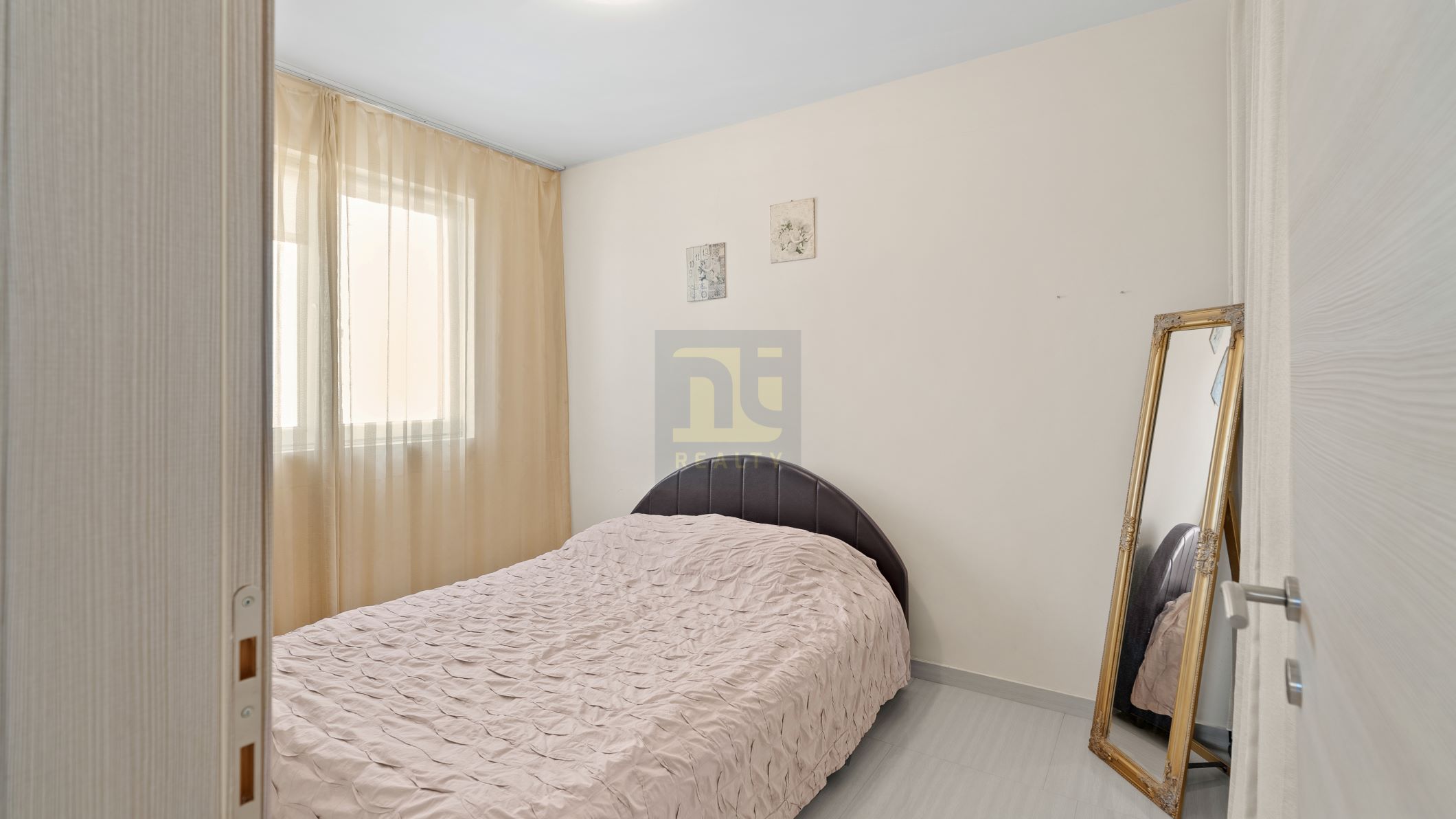
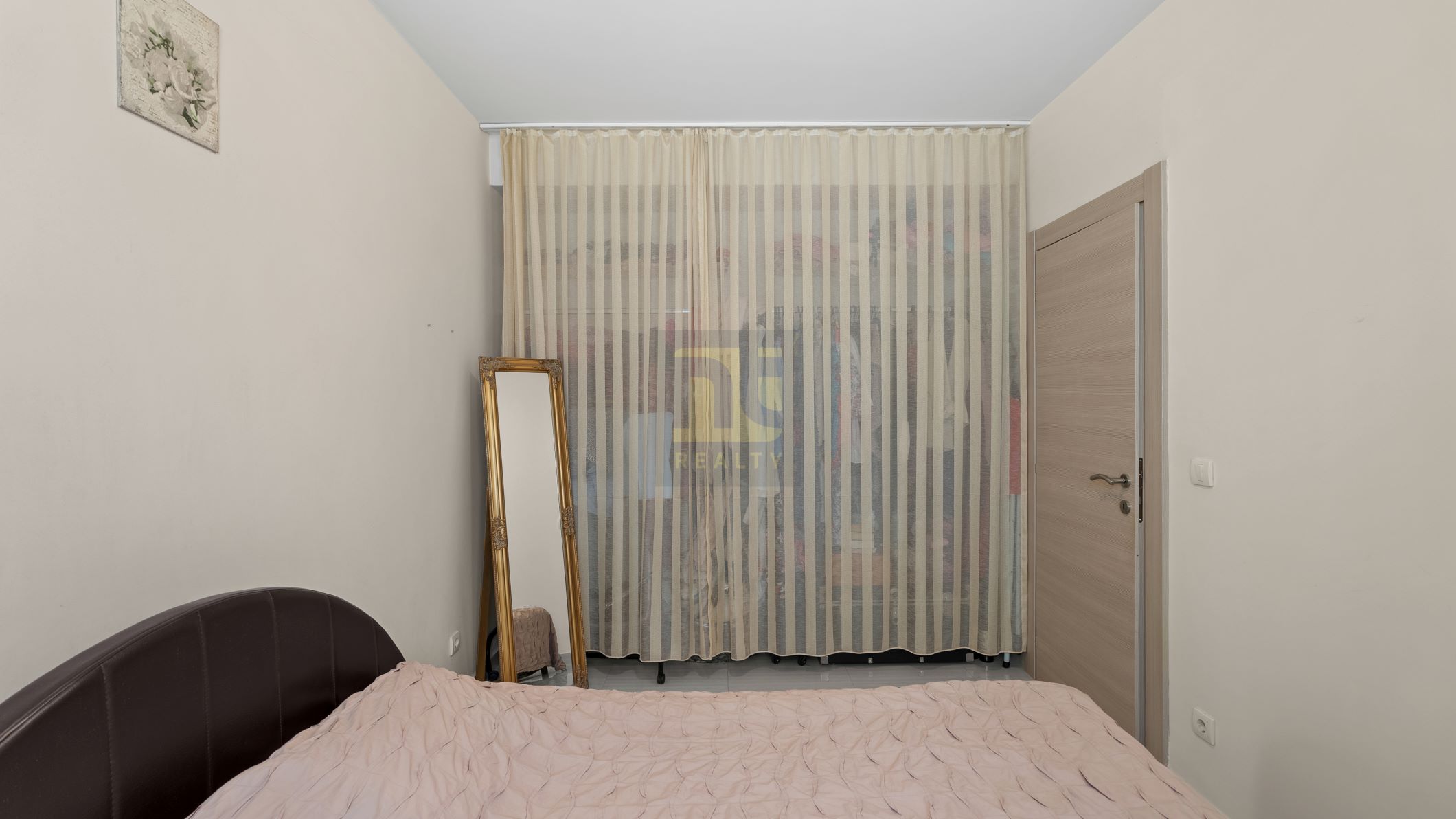
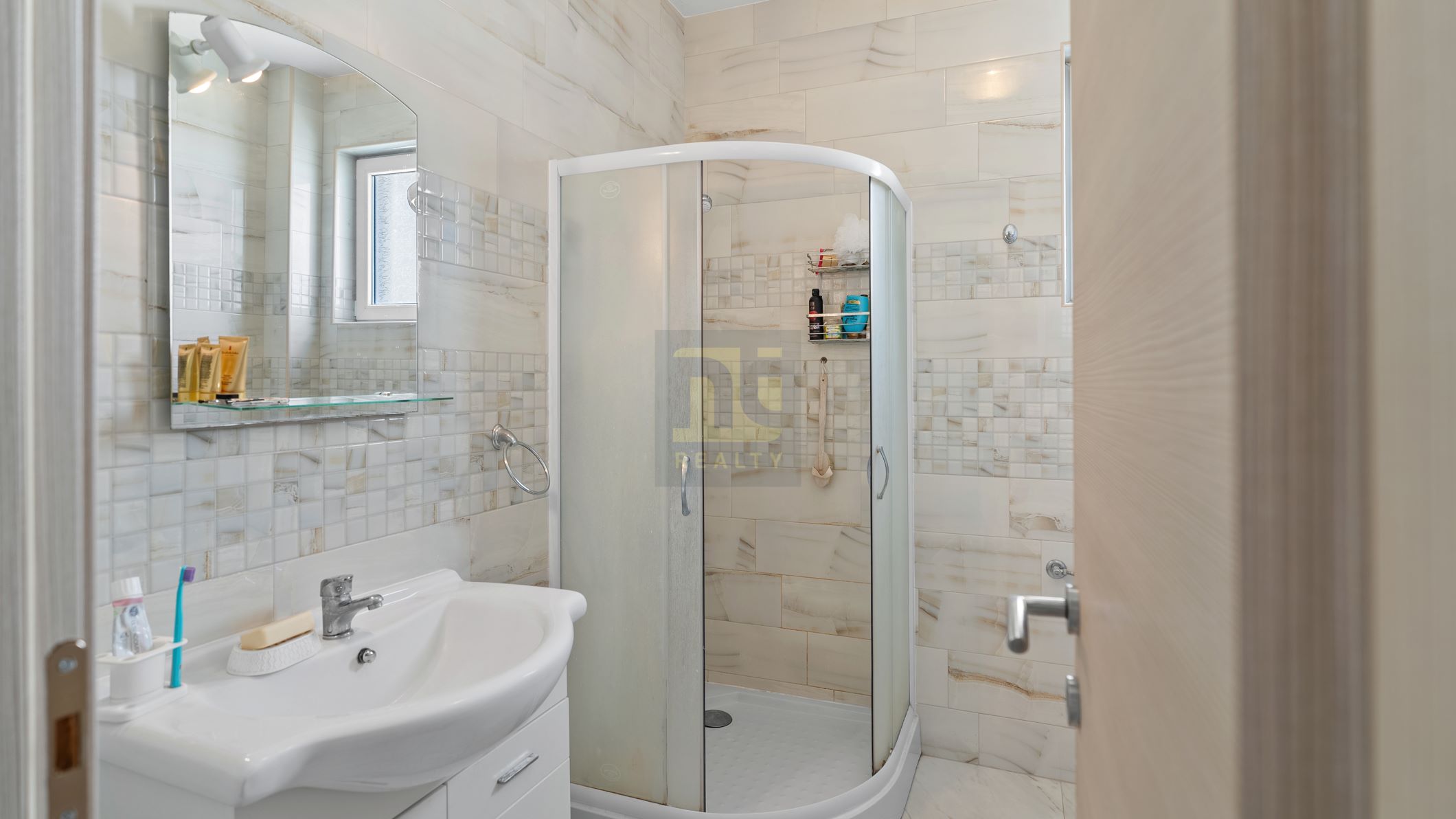
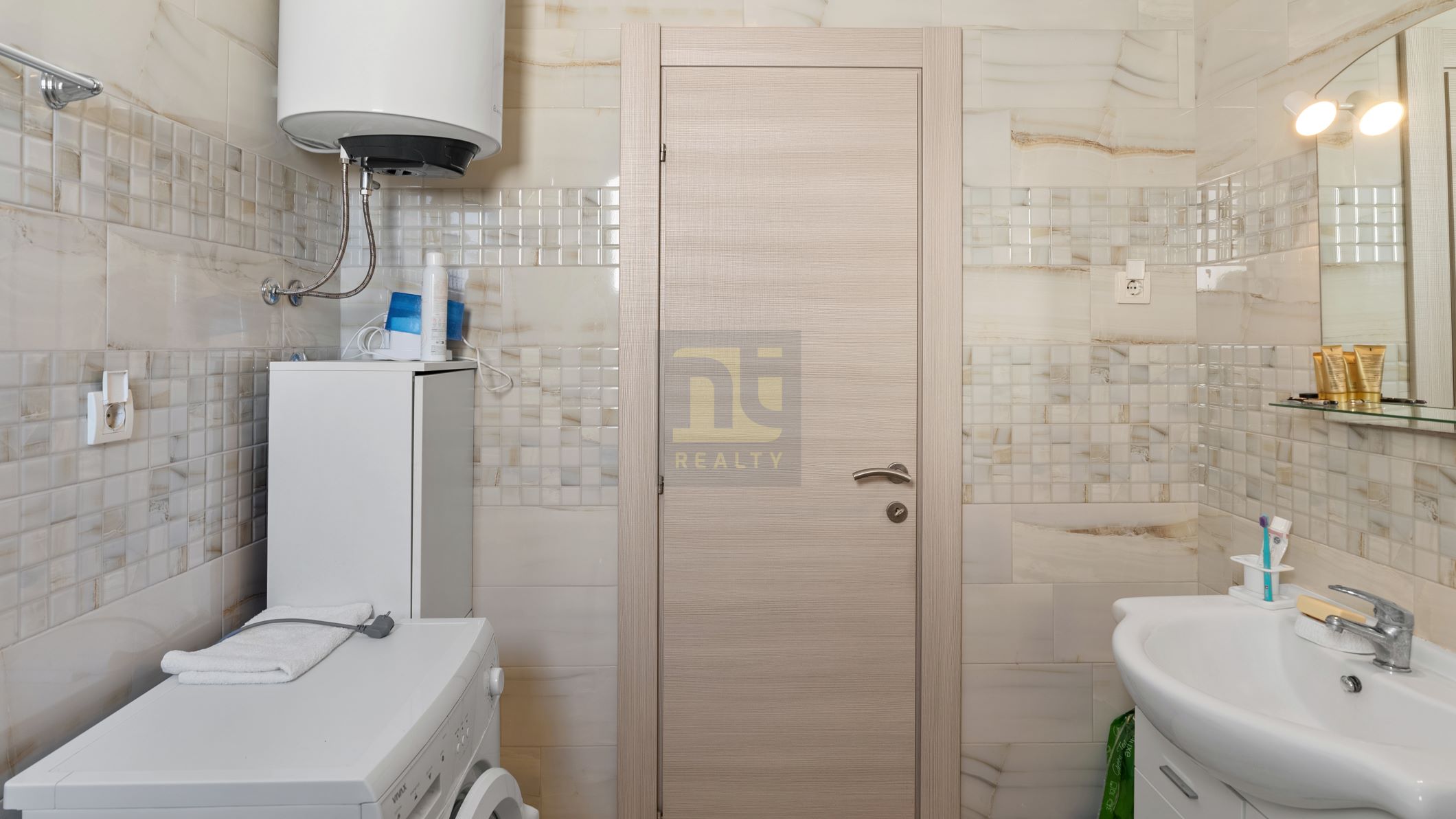
The main bedroom is a good size, with a dark leather headboard, sheer curtains, and its own water-facing window. The second bedroom is set up as a flexible space — currently furnished with a sofa bed and desk — and would work equally well as a study, guest room, or child's room. The bathroom is fully tiled with a corner shower enclosure, and a separate utility area houses the washing machine and hot water tank.
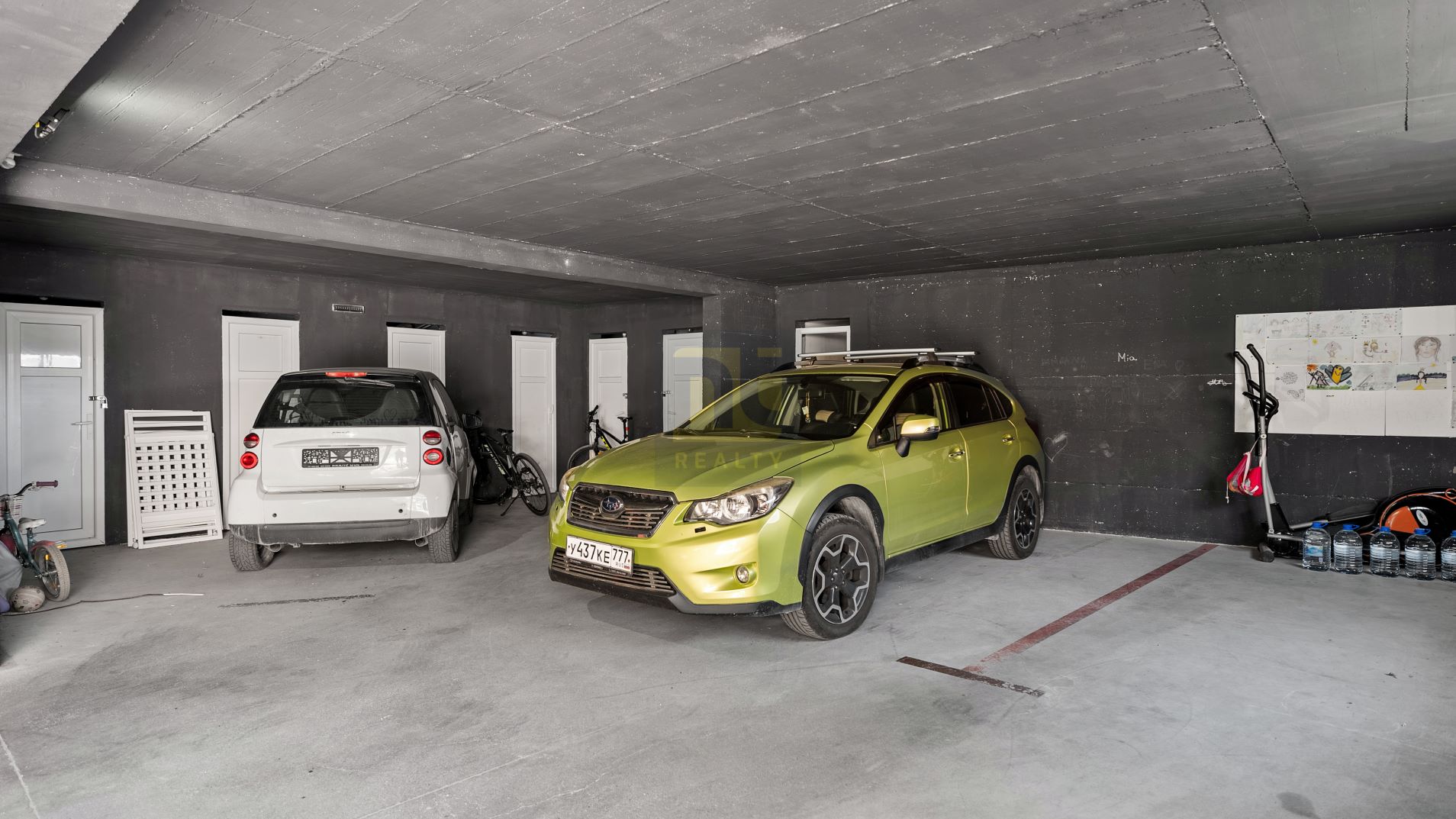
Practically, this is a low-maintenance apartment for year-round living or lock-up-and-leave use. It comes fully furnished, so there is nothing to buy before moving in. The garage — remote-opening, with a shared basement area for bikes and additional storage — takes parking out of the equation entirely, which matters more than buyers sometimes expect on Tivat's steeper streets. The separate storage room adds further practical space beyond what the apartment itself offers. Outside, the building's shared outdoor area gives children somewhere to play and neighbours a place to barbecue.
Kava itself sits close to Tivat Airport, on the eastern side of the bay, and is one of the more residential, lived-in parts of Tivat municipality — less geared toward the tourist season, more toward people who are actually there year-round. Tivat centre is 2.5 km / 4 minutes by car (around 30 minutes on foot); Porto Montenegro is 3.1 km / 5 minutes by car, allowing for summer traffic.
Key Features
- 69 m², two-bedroom, one-bathroom apartment, third floor of four, Kava, Tivat municipality
- Elevated position with views over the Island of Flowers, Island of St Marko, Luštica peninsula, and Tivat Bay, with the superyachts on Porto Montenegro's Jetty One clearly visible
- Fully furnished throughout
- Remote-opening garage space plus separate storage room (~3 m²)
- Air-conditioned open-plan living and dining room
- Covered terrace with bay views, furnished for daily use
- Shared outdoor area where children play and neighbours barbecue
- HDL supermarket a few minutes' walk, opposite the main bus station; Wine Empire and Montefish close by; Kalardovo beach five minutes by car
What Sets It Apart
Unlike most apartments at this level in Tivat municipality, this one comes with both a private garage and separate storage — two things that are routinely missing at this size and price point, and that buyers usually have to compromise on or pay considerably more to secure. Combined with a covered terrace looking across the full width of Tivat Bay to the superyachts on Porto Montenegro's Jetty One, a fully furnished, move-in-ready interior, and a location that's become increasingly sought-after among long-term and short-let tenants alike, it offers a level of practical convenience that is unusual to find already in place rather than needing to be built up after purchase.
Buyer Lens
Well suited to a young family wanting a low-maintenance, fully furnished base with genuine sea views and secure parking, and a sound long-term investment. It also makes a strong case for long-term rental: this stretch of Tivat near the airport has become increasingly popular with both Airbnb hosts and guests, helped by being only a thirty-minute walk into Tivat centre. Less suited to a buyer whose priority is walking-distance access to the old town or Porto Montenegro itself.
Local Amenities
Kava and neighbouring Mrčevac sit on the eastern side of Tivat Bay, close to the airport, in a part of the municipality that functions as a genuine residential neighbourhood rather than a seasonal one. The pace here is practical rather than touristic: a brand new supermarket, a pharmacy on the corner of the main road, a well-known wine shop, and a specialist fishmonger all sit within a few minutes of each other, and the area feels lived-in year-round rather than emptying out after summer.
On foot
- HDL supermarket (brand new): a few minutes' walk, opposite the main bus station
- Pharmacy: on the corner of the main road
- Wine Empire: ~3 minutes — one of the best-stocked independent wine shops in the Bay of Kotor
- Montefish: ~3 minutes — a well-regarded fishmonger selling fresh Adriatic seafood
- Pekara Stara Boka (bakery): close by in Dumidran/Kava
By car
- Kalardovo beach: ~5 minutes
- Tivat centre: 2.5 km / 4 minutes by car (around 30 minutes on foot)
- Porto Montenegro: 3.1 km / 5 minutes by car, allowing for summer traffic
- Kotor Old Town: 8.9 km / 14 minutes
- Tivat Airport: within the immediate area
Medical
Pharmacy on the corner of the main road. Dental Expert, Dental Smile, and DentArt — all well-reviewed clinics — are a short drive away in central Tivat.
Schools
Osnovna škola Drago Milović (state primary) and Knightsbridge Schools International (private/international) are both within reach in Tivat.
Further afield
Central Tivat, with its full range of supermarkets (VOLI, iDEA), bakeries (Bakery Kordić, Pekara Davidović), and restaurants (Macaroni Handmade Pasta, Bokka Modern at Porto Montenegro), is a short drive along the bay. Kotor Old Town is 8.9 km / 14 minutes by car.
Agent's Honest Take
What sells this one is the combination most buyers assume they'll have to choose between — a real view and genuine practicality. Plenty of apartments in Tivat municipality offer one or the other. Fewer offer both: a third-floor position with an uninterrupted line across the bay to Porto Montenegro, sitting above a garage and storage room that most flats this size simply don't have. This stretch of Tivat near the airport has quietly become one of the more active corners of the short-let market, and a fully furnished, well-positioned apartment like this one is exactly what Airbnb hosts and guests are chasing. Kava won't suit a buyer who wants to walk to the old town for dinner, but for anyone planning to live here, let it long-term, or run it as a rental, the day-to-day logistics are already solved. Fully furnished, parking sorted, storage sorted. That is worth more in practice than it sounds on paper.
All details in this document are provided in good faith by the owner and should be independently verified.
NT Realty is a boutique real estate agency based in Tivat, Montenegro. Founded by Peter Flynn, who first came to the Bay of Kotor in 2005 as a property investor and has since built businesses across real estate development, architecture, and interior design, the agency is run alongside Maša Flynn — architect and former Head of Design at Porto Montenegro, where she delivered over €60 million of projects on time and on budget. Between them they bring a depth of local market knowledge that is difficult to find elsewhere in the region.
The team specialises in properties for sale and long-term rentals across the Bay of Kotor, Tivat Bay, and the Luštica Peninsula — from Porto Montenegro and Luštica Bay to private homes throughout the wider region. Our job is to guide buyers, sellers, and tenants through the process clearly, honestly, and without unnecessary complexity.
Map
Neighbourhood Guide

Explore Tivat
Learn More about living in Tivat: Things to Do and See in Tivat
Frequently Asked Questions

After purchase and registration, you'll receive keys and take possession. Next steps include transferring utilities to your name, setting up building management payments if it's an apartment, getting home insurance, and—if you're renting it out—registering for tourist tax and obtaining any required permits. Your lawyer or agent can guide you through the administrative bits.
Rental income is taxed at 15% on gross receipts if you're renting short-term (tourist rentals), or you can opt for taxation on net income after expenses for long-term rentals. You'll also pay municipal tourist tax (€1 per night per guest in high season, €0.50 in low season) and need to register your rental with the tax authorities and tourism directorate.
Annual property tax is quite low—just 0.25% of the property's assessed value per year. The assessed value is typically well below market value, so you might pay €200-500 annually on a coastal apartment worth €200,000. It's collected by your local municipality and is one of Montenegro's more affordable ongoing costs.
Notary fees are set by official tariff and scale with your purchase price. For most residential properties, expect €350-€1,000 plus 21% VAT—so roughly €423-€1,210 total. A €250,000 property runs about €532 in base fees. There are also small charges for document copies and administrative filing, so your final notary bill might be slightly higher.
For resale properties, you'll pay 3% Real Estate Transfer Tax (RETT) on the purchase price. New builds from developers are zero-rated for RETT but include 21% VAT in the price—though developers can usually reclaim this VAT. Either way, budget around 3% of the purchase price for transfer taxes unless it's a new build where VAT is already included.
The notary doesn't receive or hold the money directly. Instead, the seller must confirm in writing to the notary that they've received the full purchase price. Only after the notary receives this written confirmation (and verifies tax obligations are met) will they issue the Clausula Intabulandi. Some transactions use bank confirmations for added security.
Yes, if you're married or in a registered partnership, you typically need your spouse's or partner's written consent to sell property in Montenegro, even if the property is registered solely in your name. This protects both parties' interests under matrimonial property rules. Your notary will confirm the specific requirements for your situation.
The Clausula Intabulandi is the notary's official confirmation that all legal and financial obligations have been met, allowing the property to be registered in your name. The notary issues it only after verifying you've paid the full price and all taxes. It's your green light for cadastre registration—without it, you can't become the legal owner.
Every property and owner has specific numbers that appear on contracts: your JMBG (personal ID), the seller's JMBG or company registration, and the property's cadastral parcel number (katastarska parcela/čestica). These link everything in the official registries and are essential for registration and tax purposes.
No, Montenegro doesn't have a title insurance system like the US or UK. Instead, buyers rely on comprehensive legal due diligence—your lawyer or notary checks the cadastre, ownership history, encumbrances, and permits before you commit. It's a different system, but with proper checks it's just as secure.
It depends on where your documents were issued. If you're from a Hague Convention country (which includes most Western countries), you need an apostille. If not, your documents need consular legalisation. Either way, they'll also need certified translation by a sworn court translator in Montenegro.
Your lawyer requests an official extract (List nepokretnosti) from the Real Estate Cadastre, which shows current ownership, any mortgages or liens, property boundaries, and legal description. The notary also verifies the seller's identity and legal capacity. This due diligence typically takes a few days and costs around €18-25 for the cadastre extract.
You obtain a JMBG through the local Police Directorate (MUP) by presenting your passport, proof of property ownership, and completing a simple application. The process typically takes a few days, and you'll need this number for tax declarations and property registration—even without residency.
For a straightforward resale apartment with clean paperwork, the buying process can often be completed within 3-6 weeks. More complex transactions, new builds, or mortgage-financed purchases can take longer.
Some banks do lend to foreigners, but conditions are tighter—lower loan-to-value ratios and stricter income requirements. Many foreign buyers finance through their home country or pay cash.
Officially, everything is in euros. You can convert from your home currency before sending, or in some cases settle using cryptocurrency if both parties and the notary agree—but the contract price and taxes are always euro-based.
Beyond the purchase price and transfer tax, budget for notary fees, translation, legal fees, and potentially agency commission—together, these typically add 2-4% to your total cost.
No. Most foreign buyers use a Power of Attorney to authorize someone here—your lawyer, NT Realty, or another trusted representative—to sign on your behalf.
By convention, the buyer usually pays both the notary fees and the sworn court translator fees, though this can be negotiated between parties.
Yes, and it's more straightforward than most people expect. Montenegro welcomes foreign buyers—both EU and non-EU—and you can own property in your own name without needing residency or a local company in most cases.
Disclaimer: Purchase Costs & Information Accuracy
All costs associated with the purchase, including notary fees, real estate transfer tax (if applicable), and any legal fees, are the sole responsibility of the buyer. ntRealty bears no responsibility for the correctness of the information published here, which is based exclusively upon details provided to us by the property owner(s). ntRealty has no obligation to update, modify, or amend this listing or to notify a reader if any information, including urbanistic or cadastral data, subsequently becomes inaccurate. All listings are subject to prior sale. Agency Commission: No agency commission is charged to the buyer. The agency fee is paid by the seller.
Similar Properties
.jpg)
Get Montenegro real estate updates directly in your inbox.
Are you interested in buying a home? Look no further than working with our real estate experts.