

Dobrota Frontline Captain's Villa for Sale
€2,500,000

Peter Flynn
Features
Explore in 3D
Guided Video Tour
In Brief
A four-bedroom, four-bathroom first-line stone villa on the water's edge in Dobrota, Kotor municipality, formed from two adjoining stone captain's houses combined into one home by their English developer. Drive-in access from the main coastal road — park in the private courtyard and take a short flight of steps down to the house, rather than negotiating the narrow lower road most waterfront properties here depend on. Gross house area of 490 m² (274 m² residential) across three floors and an attic, set on a 500 m² plot with two separate courtyards — one facing the sea, one to the rear. The first floor is given over entirely to the principal suite; two further en suite bedrooms sit on the second floor, and a fourth in the attic. Fully renovated to a contemporary standard, furnished throughout, with a 100 m² terrace off the ground-floor living space looking directly across the bay, and a mooring point at the water's edge. Three off-street parking spaces. Kotor Old Town 4.1 km.
Description
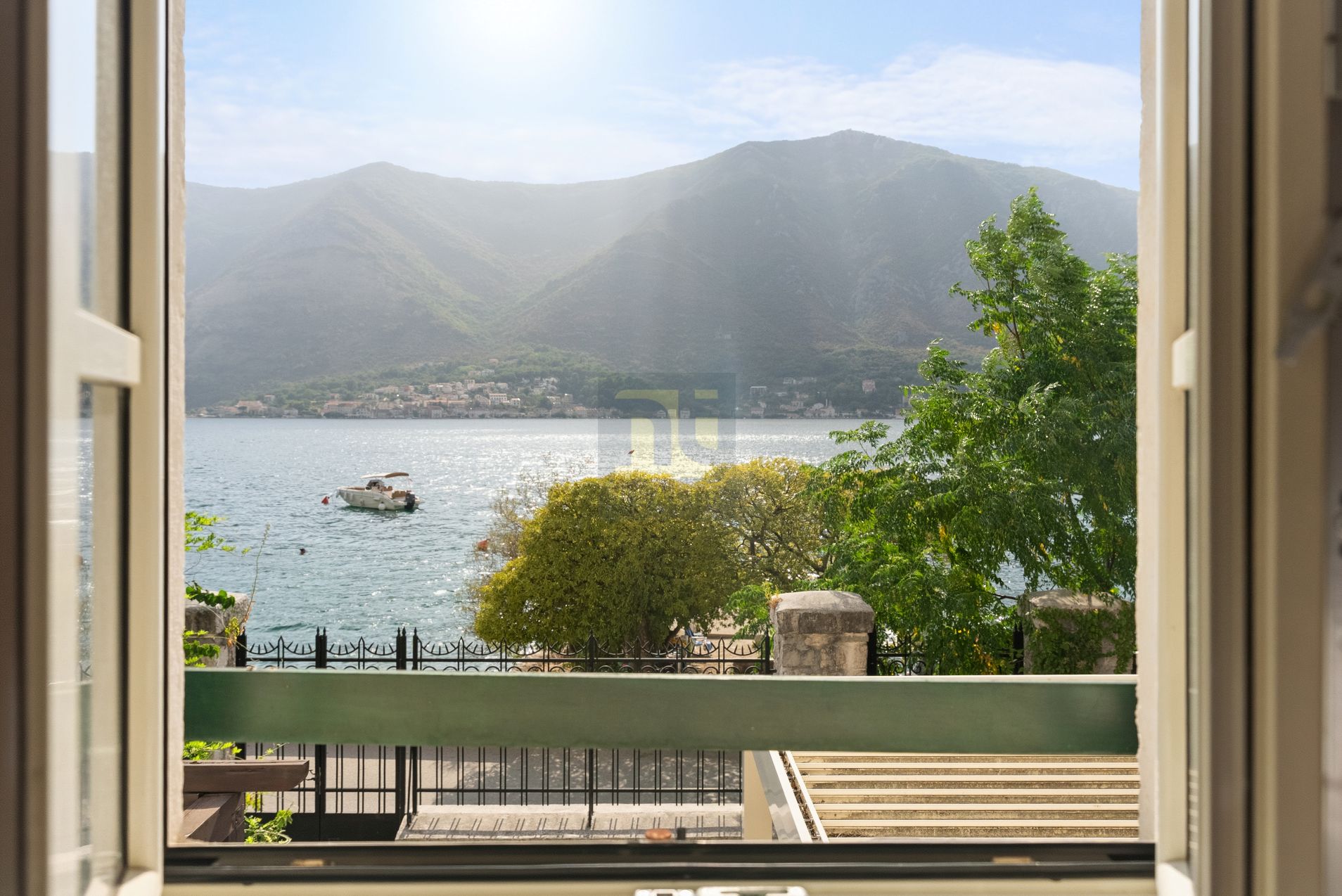
Most first-line houses in Dobrota make you work for the privilege — a narrow lower coastal road, tight or non-existent parking, bags carried down uneven steps from wherever the car could be left. This one does not. Access is from the main coastal road: park in the villa's own courtyard, and a short flight of steps brings you straight down to the house and the water. It is a genuinely practical advantage, and an unusual one on this stretch of coast, where first-line so often means compromise on access.
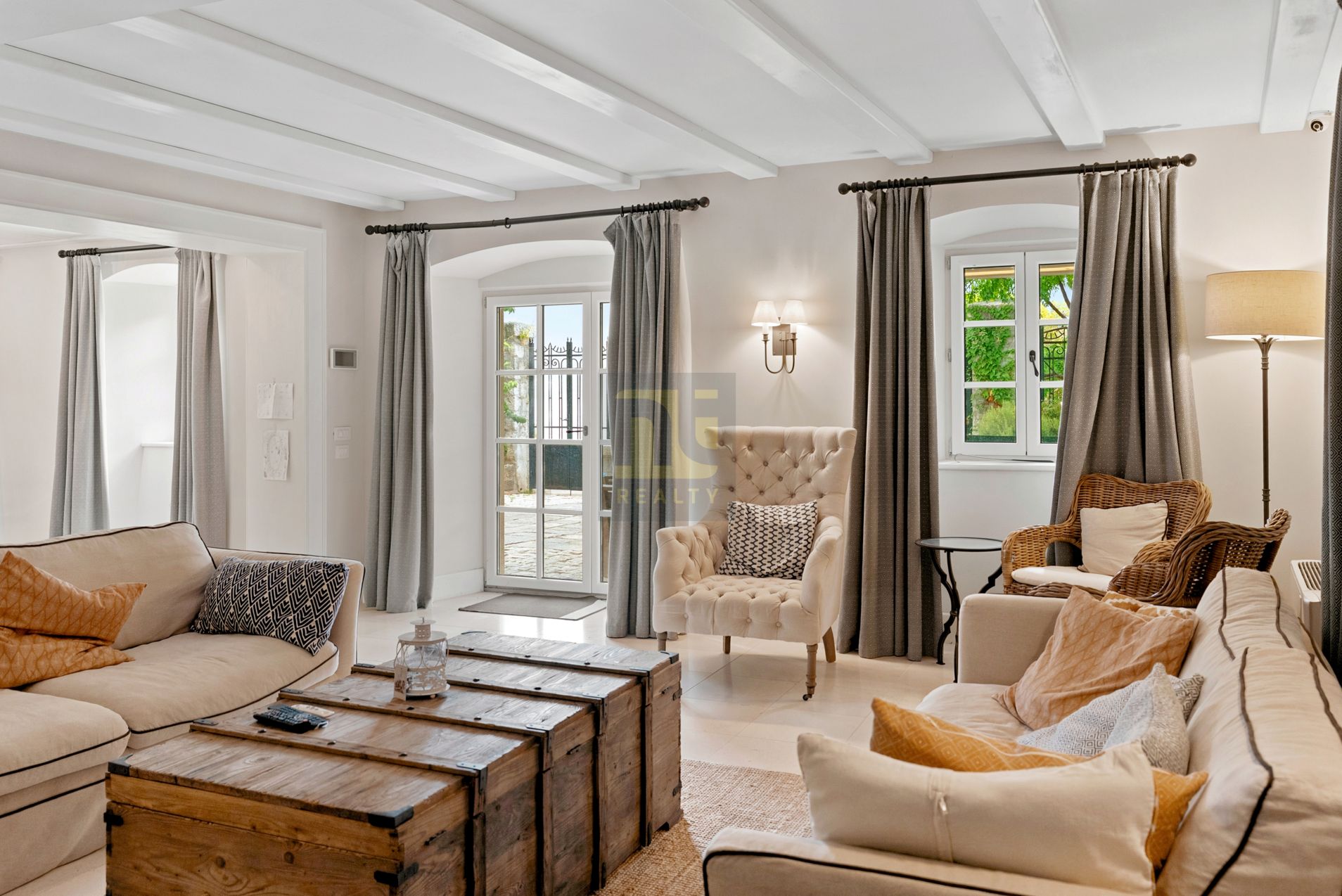
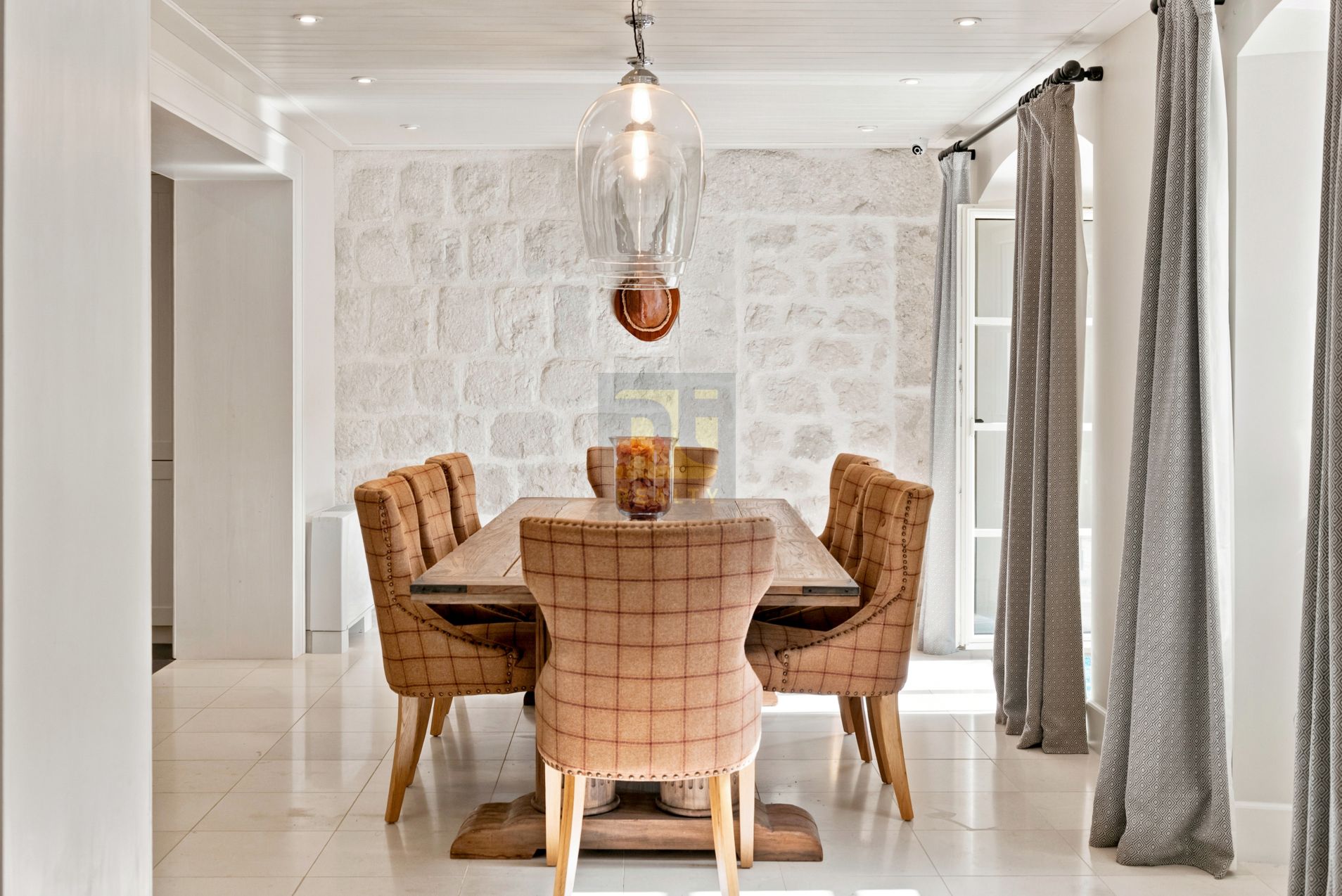
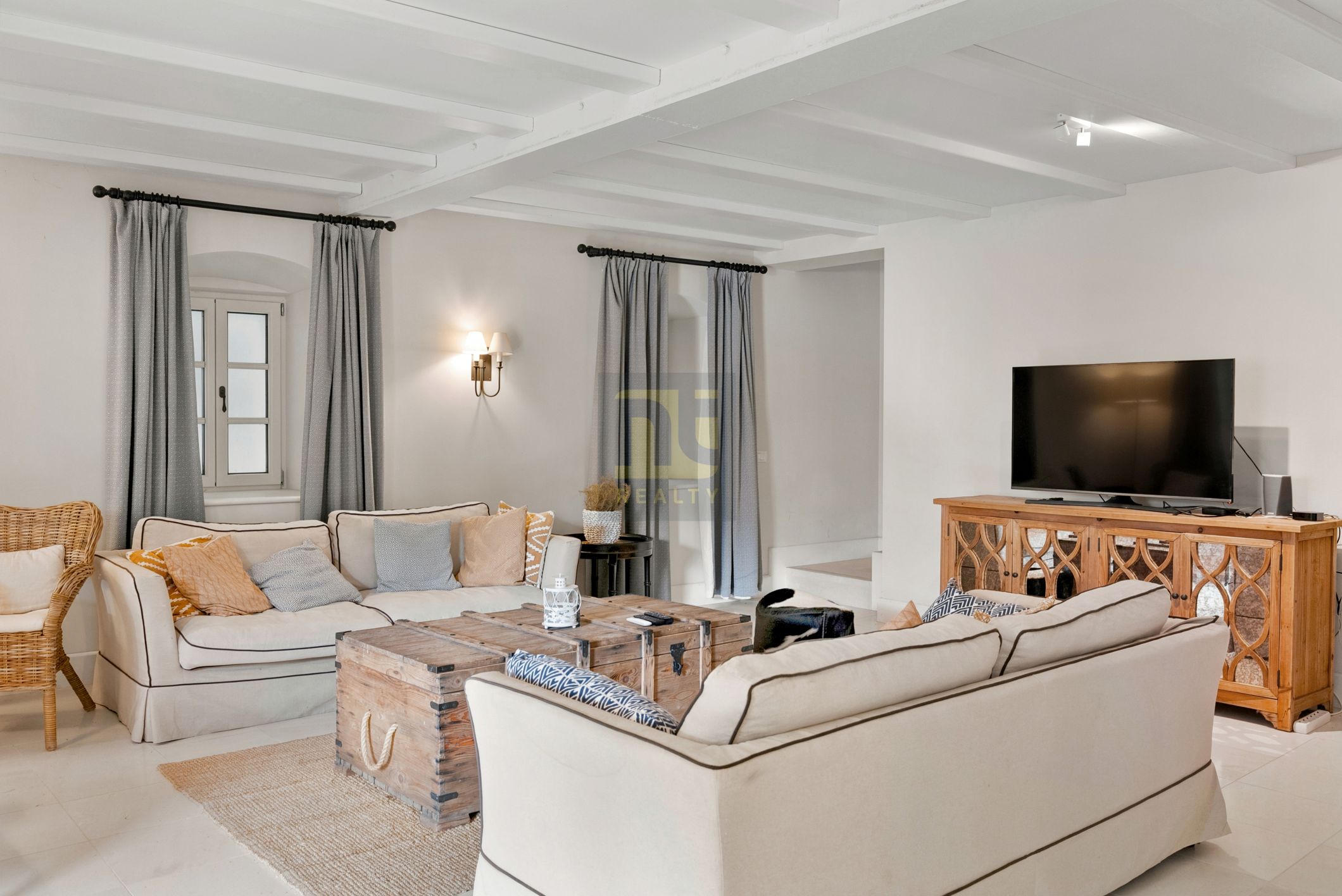
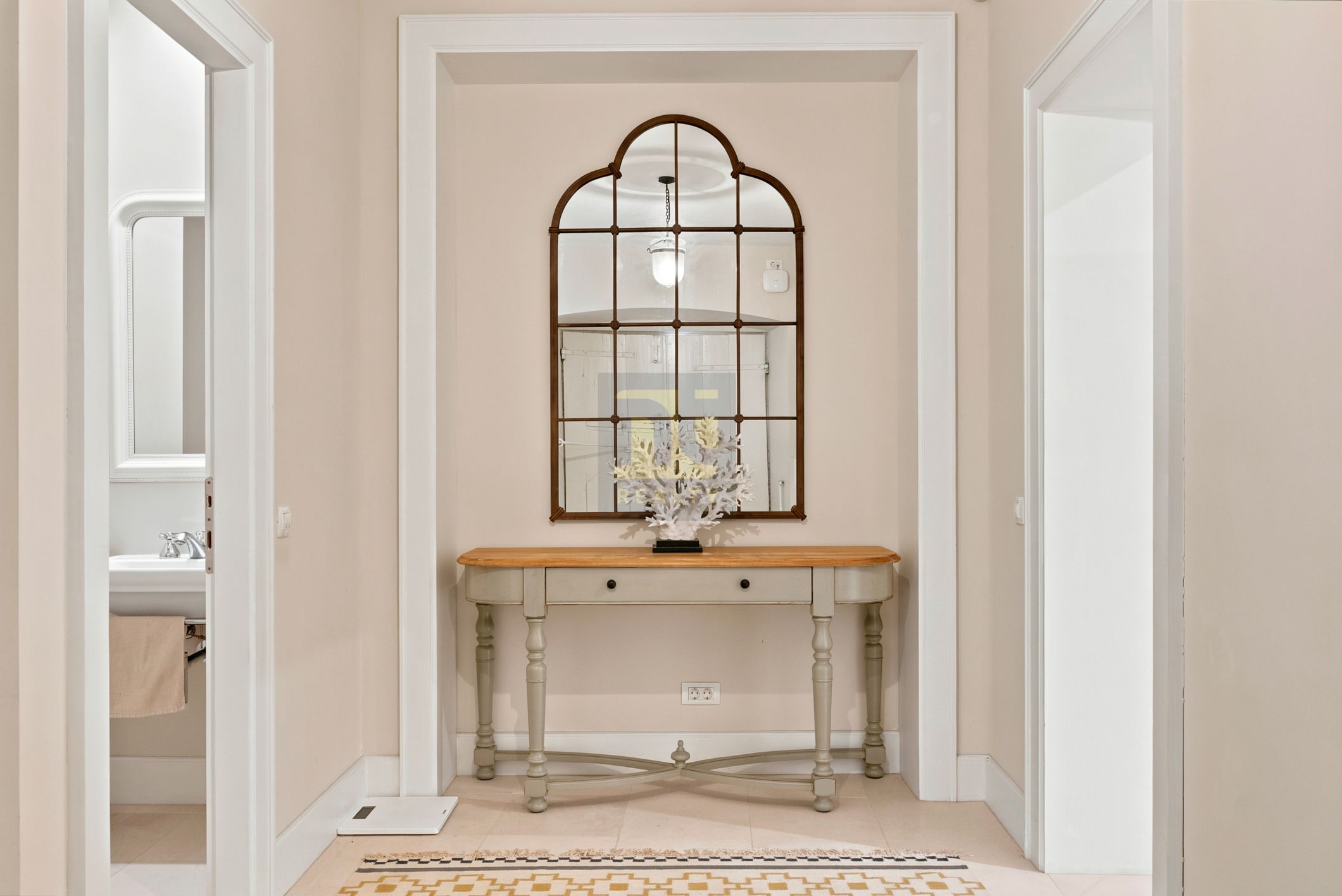
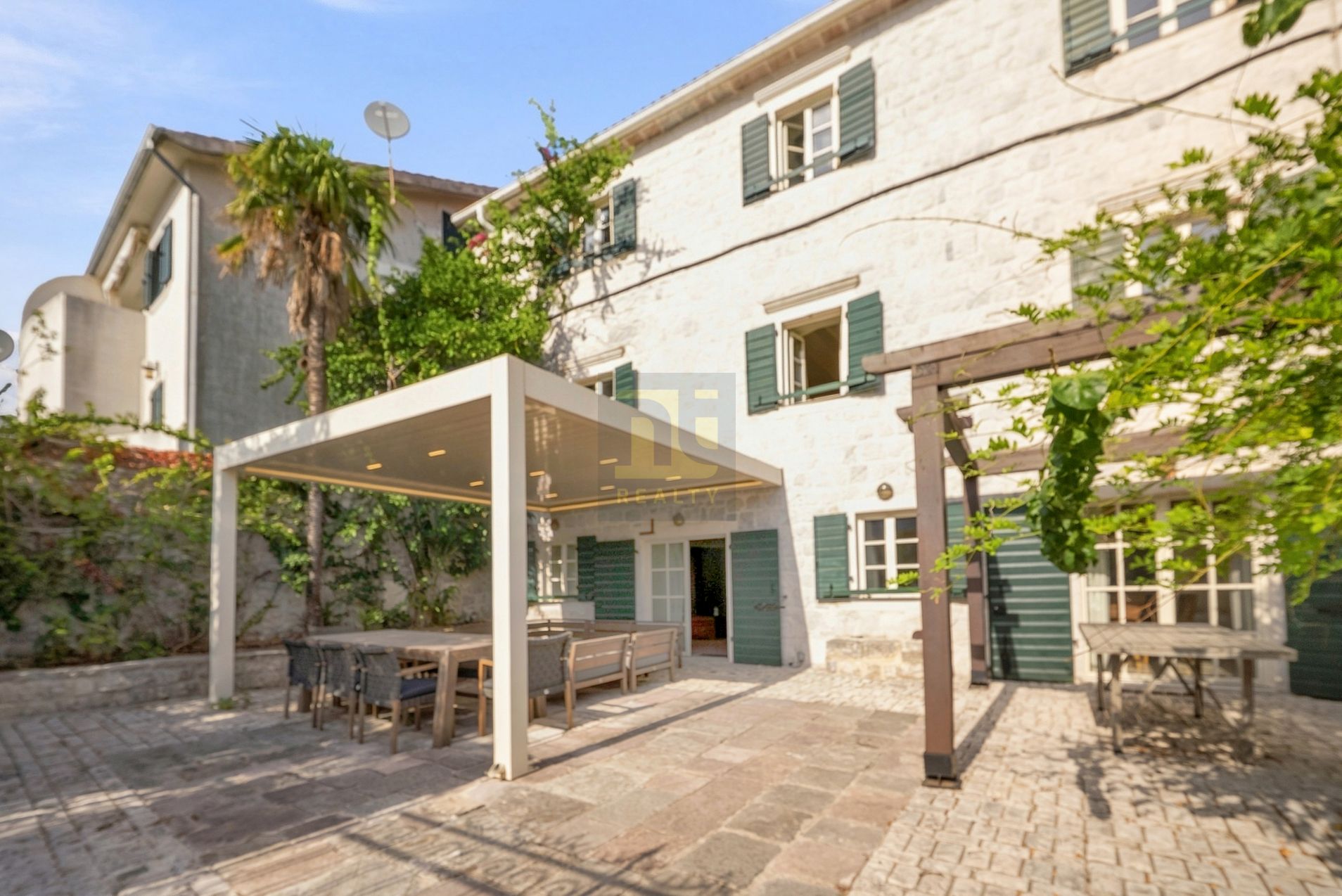
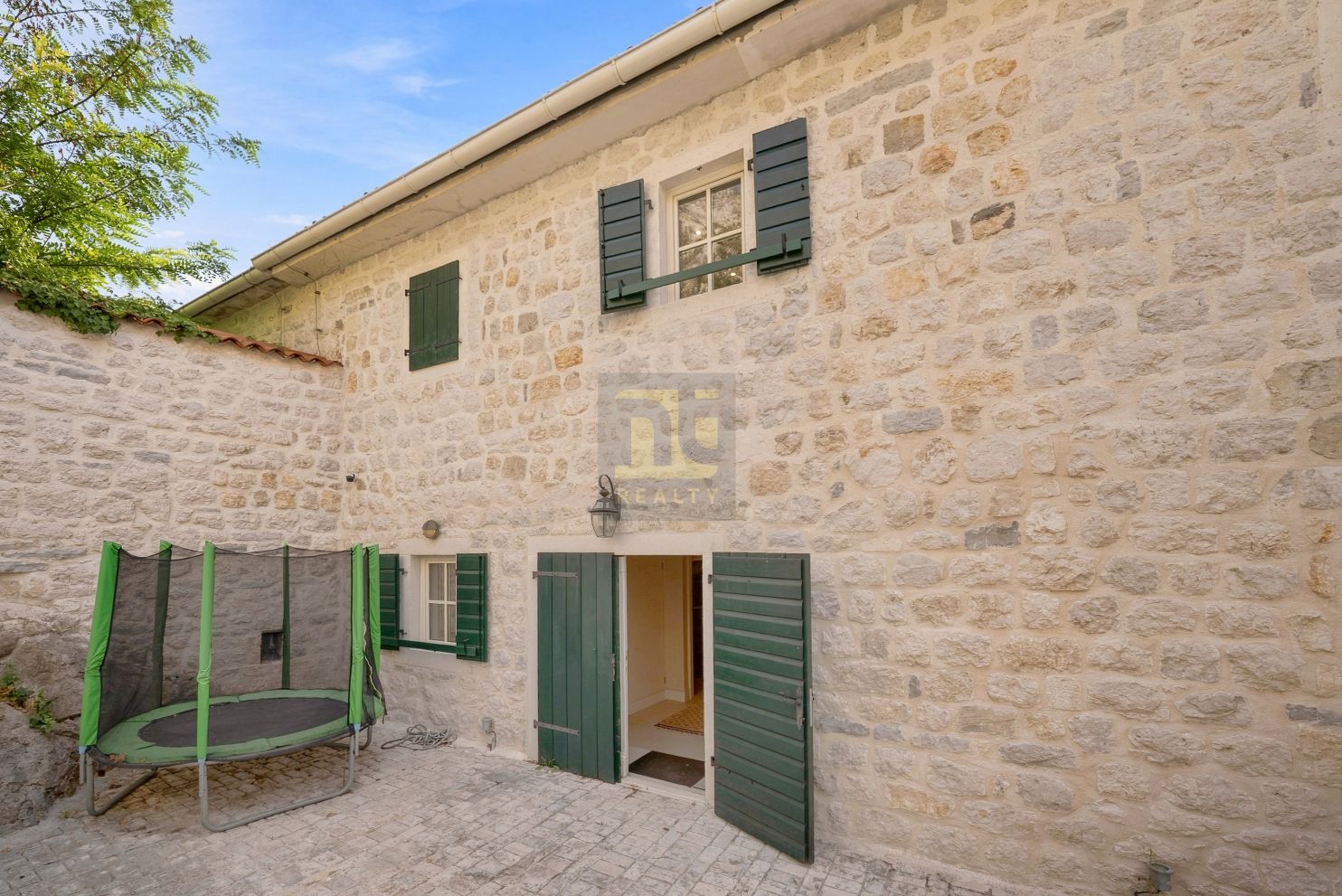
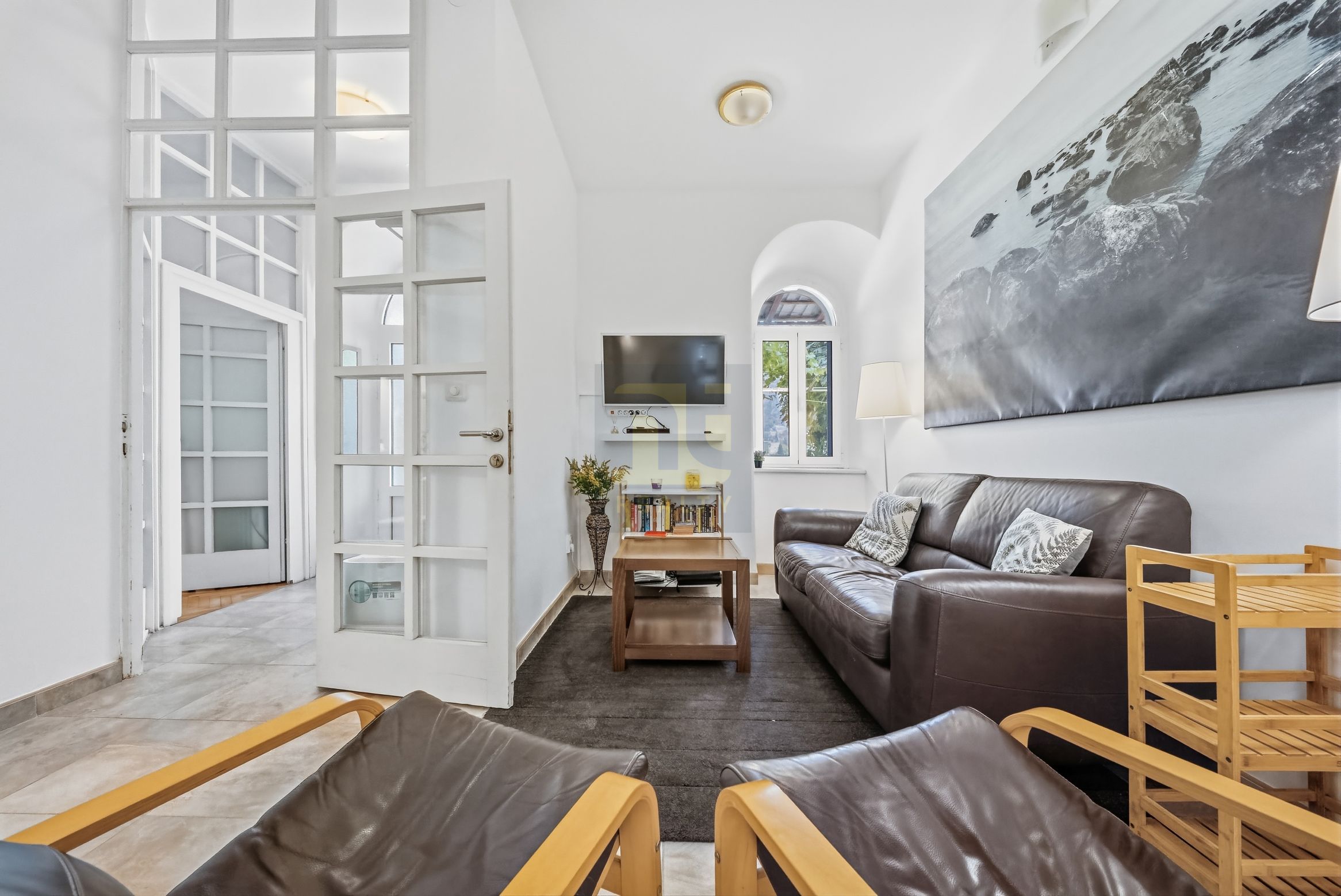
The villa began life as two separate stone captain's houses, bought and combined into one by an English developer with a track record in high-end renovation along this coast. Buying both gave him the freedom to rethink the interior from scratch rather than work around a single building's constraints — which is why the layout here reads as considered rather than adapted, room by room, floor by floor. The result presents as a single traditional Dobrota captain's house — pale stone, green-shuttered windows, a terracotta roof — set behind wrought-iron gates directly on the coastal road. Inside, the renovation has kept faith with the building's character while rebuilding everything else: exposed stone feature walls, ceiling beams, and original masonry sit alongside new mechanical systems, contemporary finishes, and furniture chosen specifically for the house.
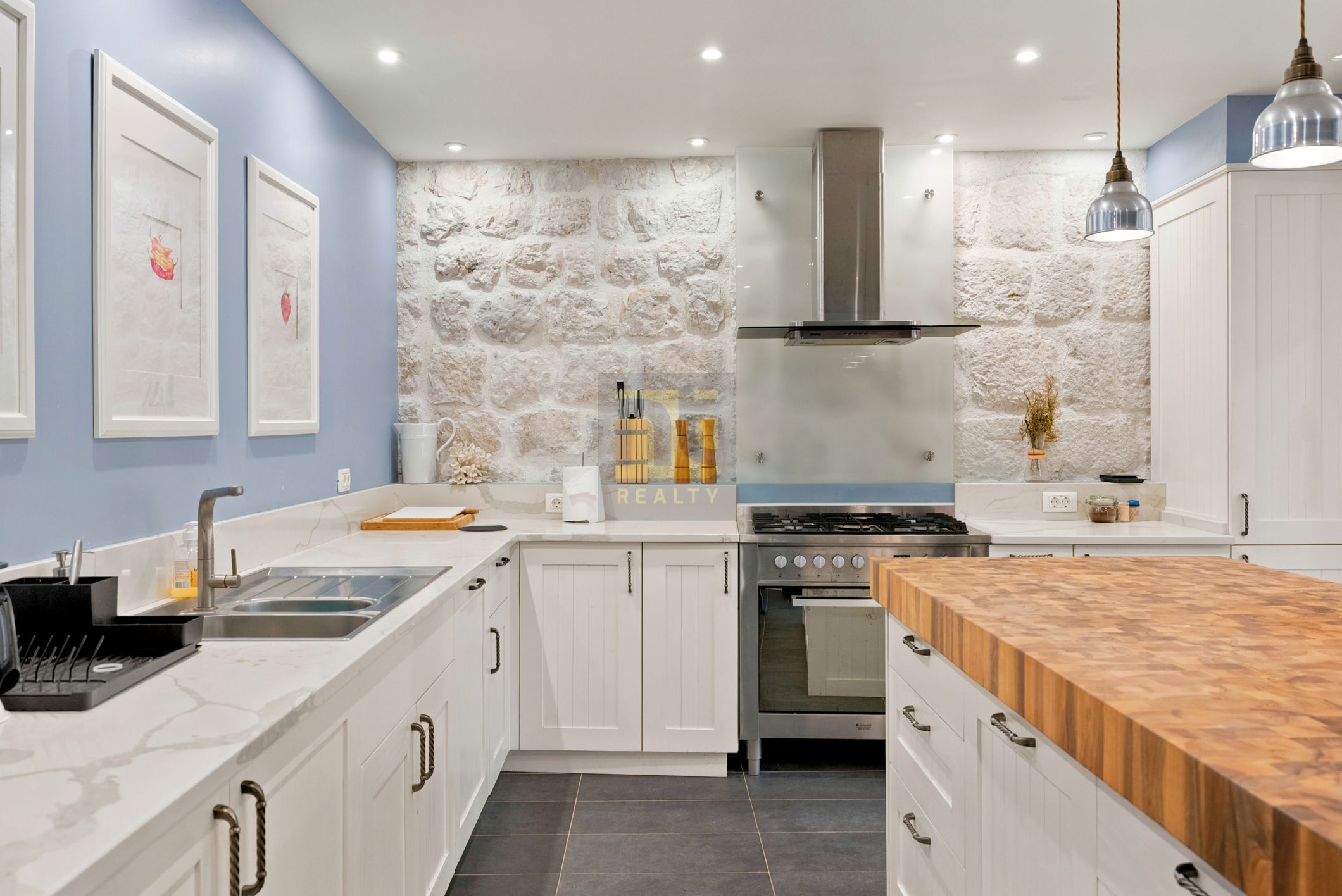
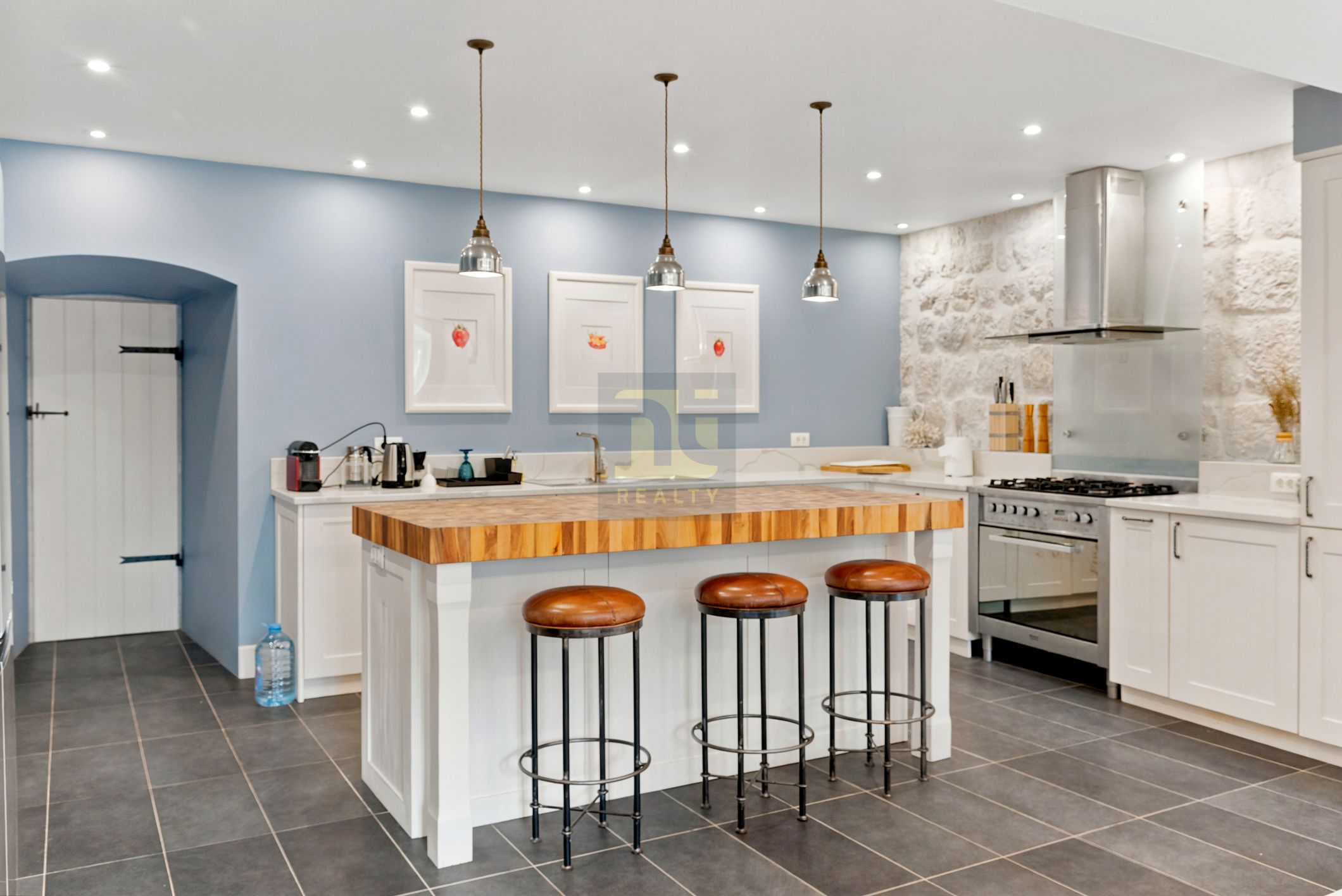
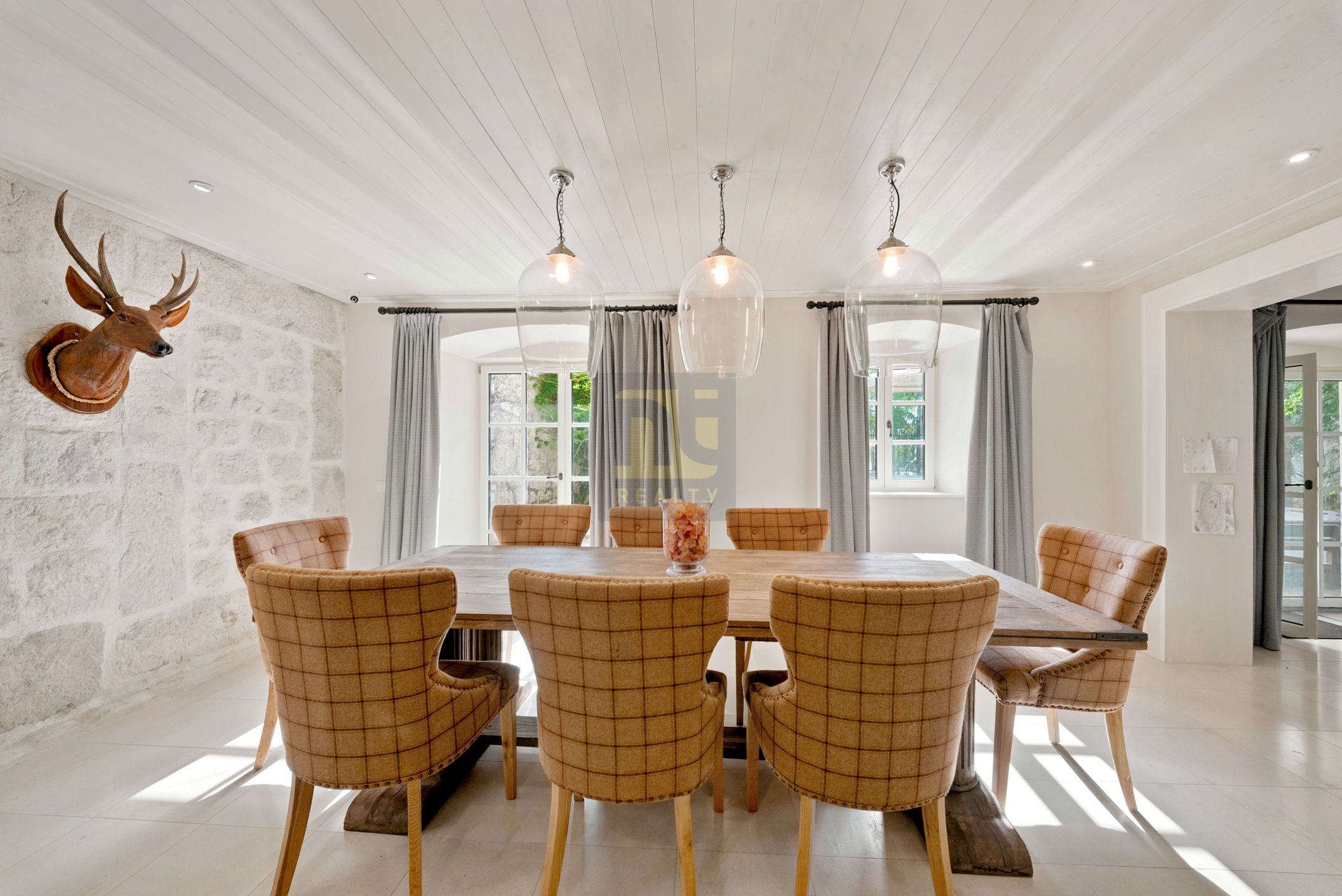
The ground floor is where the villa does its entertaining. A large living and dining room opens through to a separate designer kitchen — white cabinetry, a butcher's-block island, and a stone accent wall — arranged as one open sequence rather than a series of closed rooms. From here, glazed doors lead straight onto the 100 m² terrace, tiled and open to the water, easily large enough for dining, lounging, and everything in between. A pantry and a technical room housing the central water boiler sit off the kitchen, out of sight but close at hand.
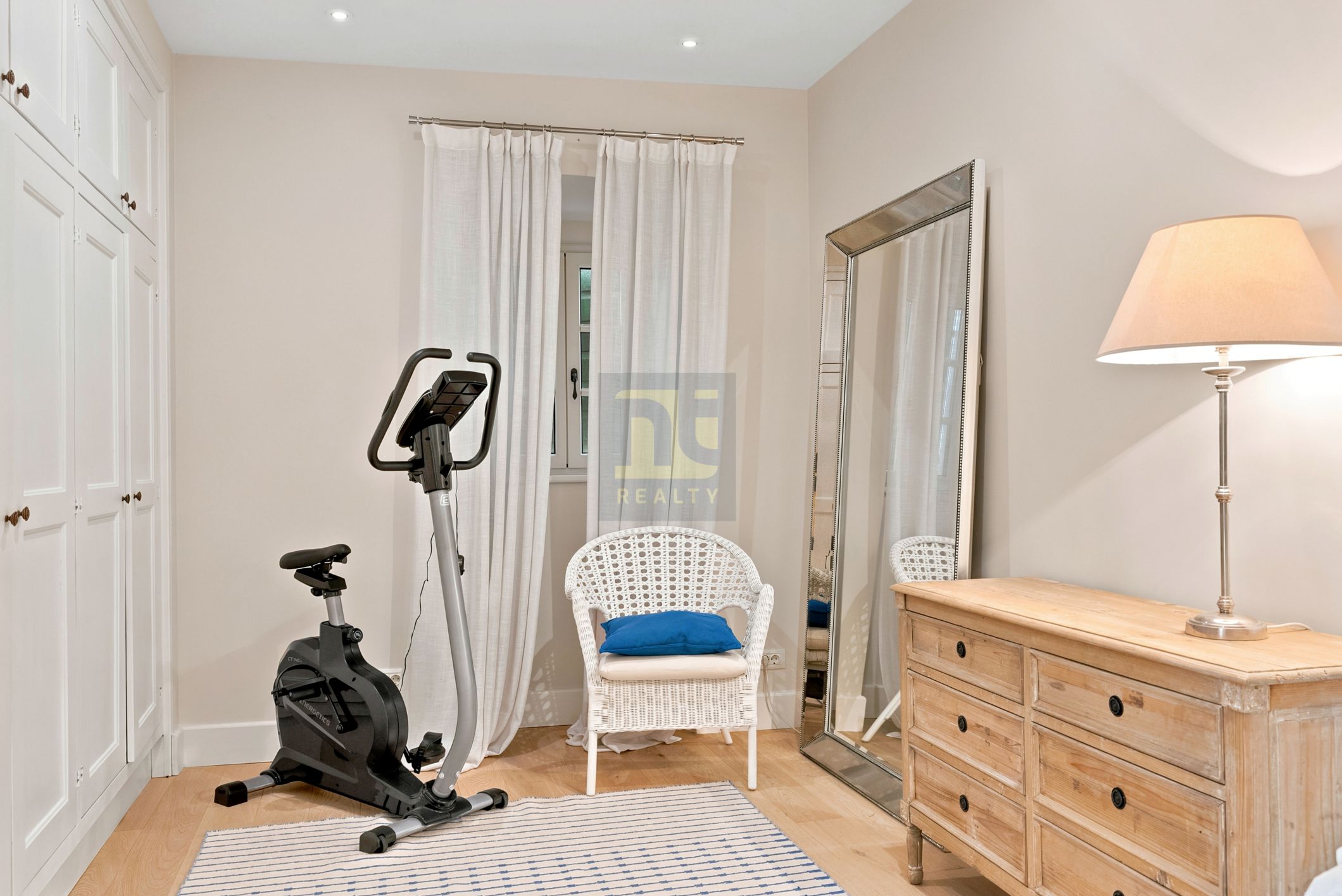
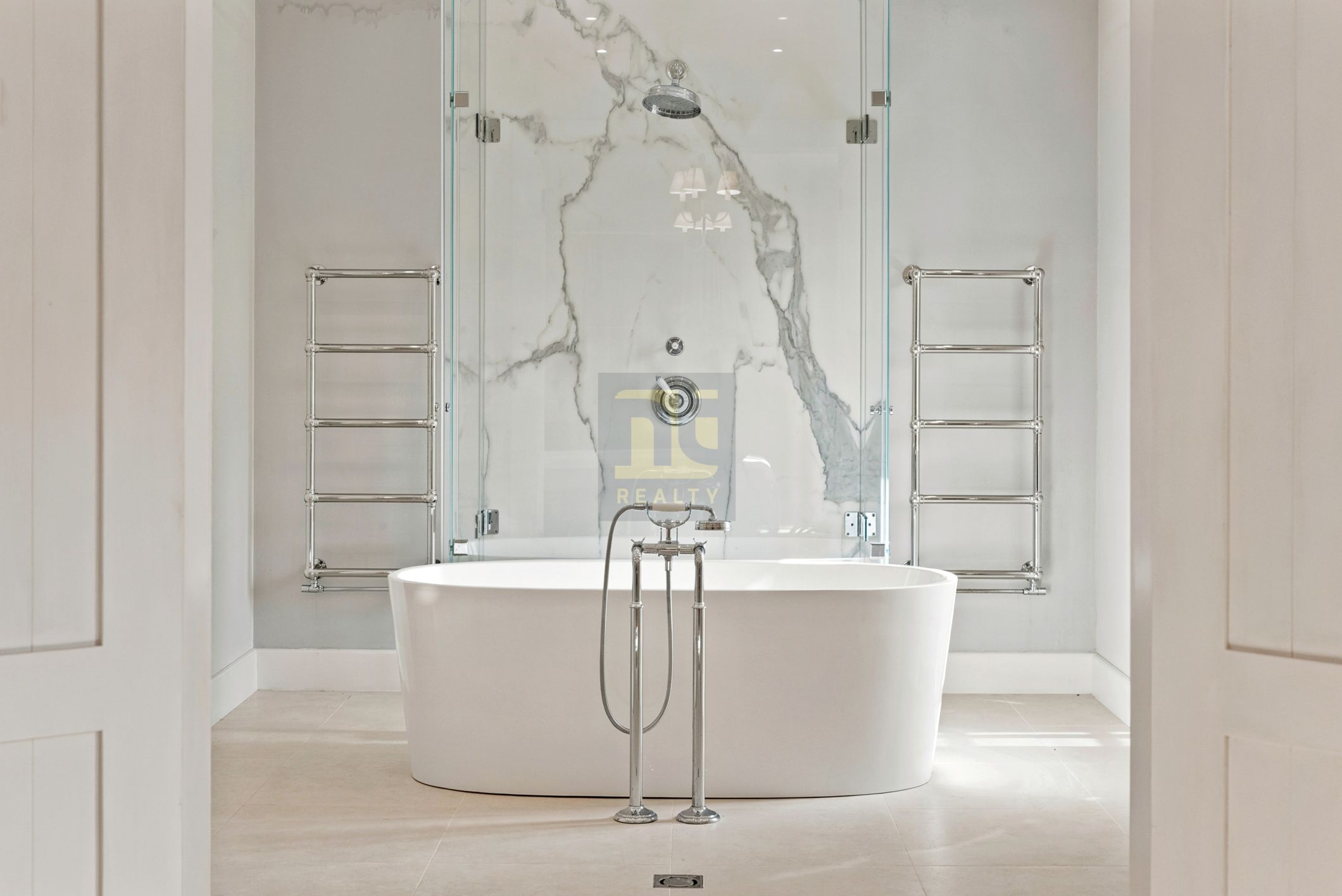
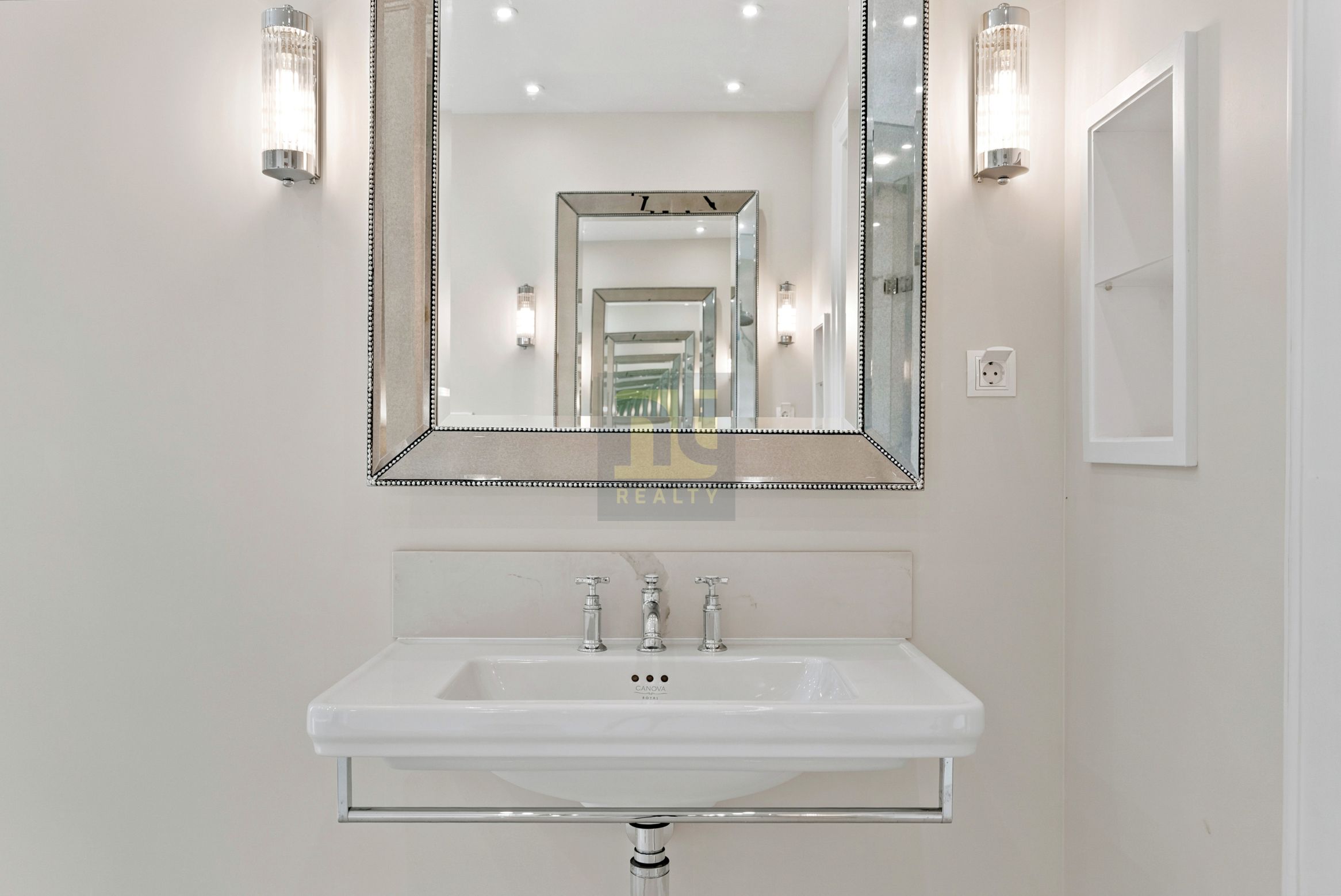
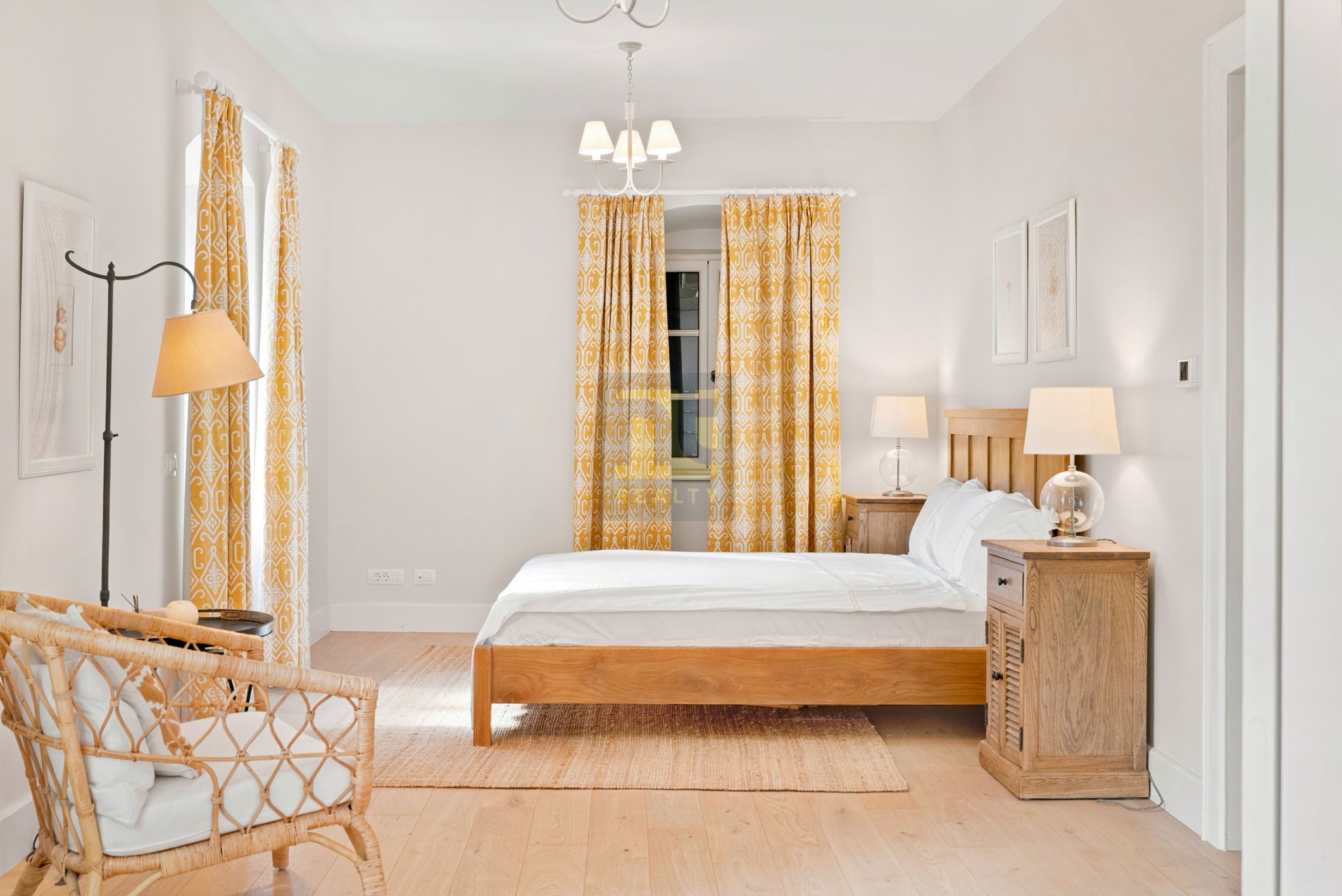
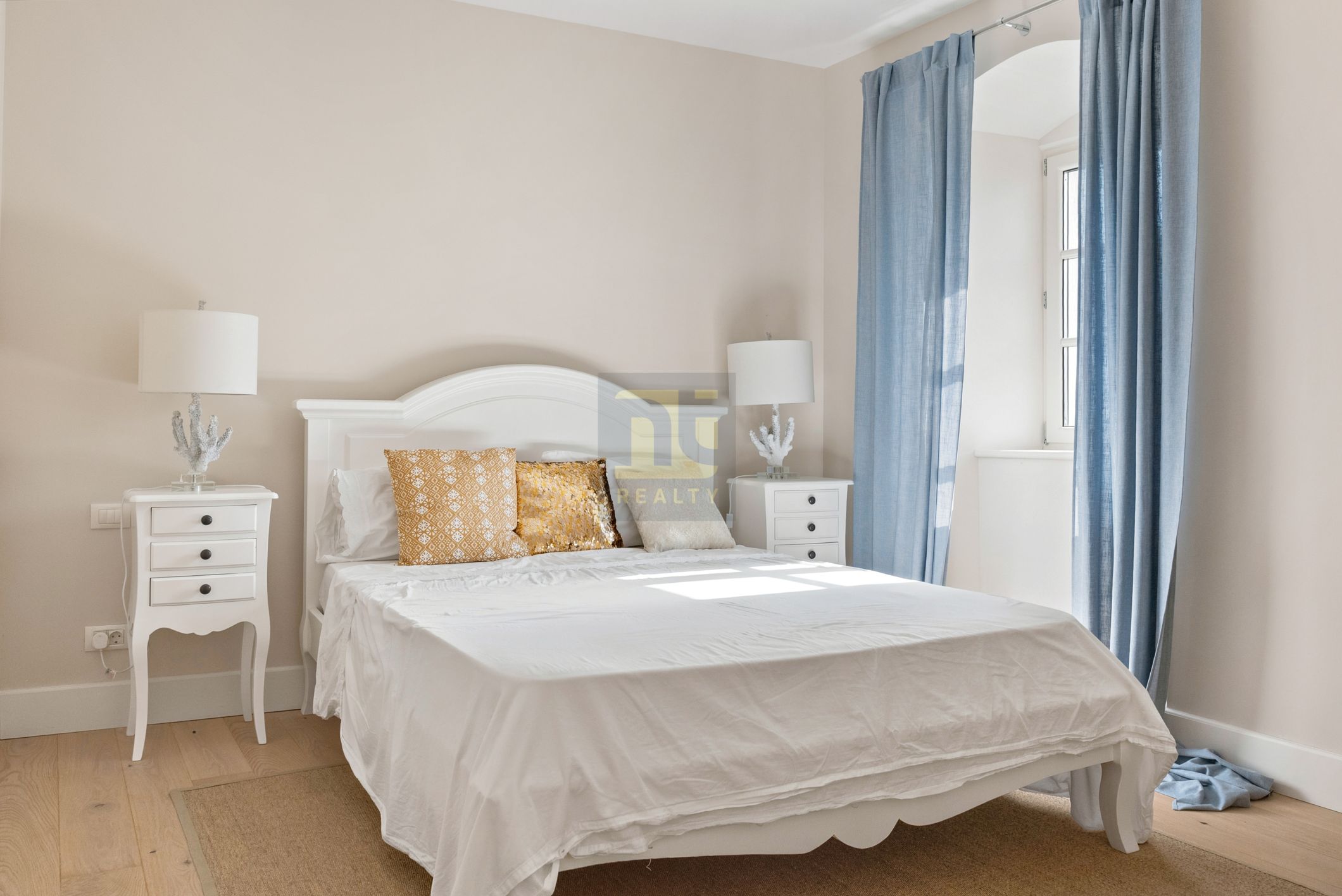
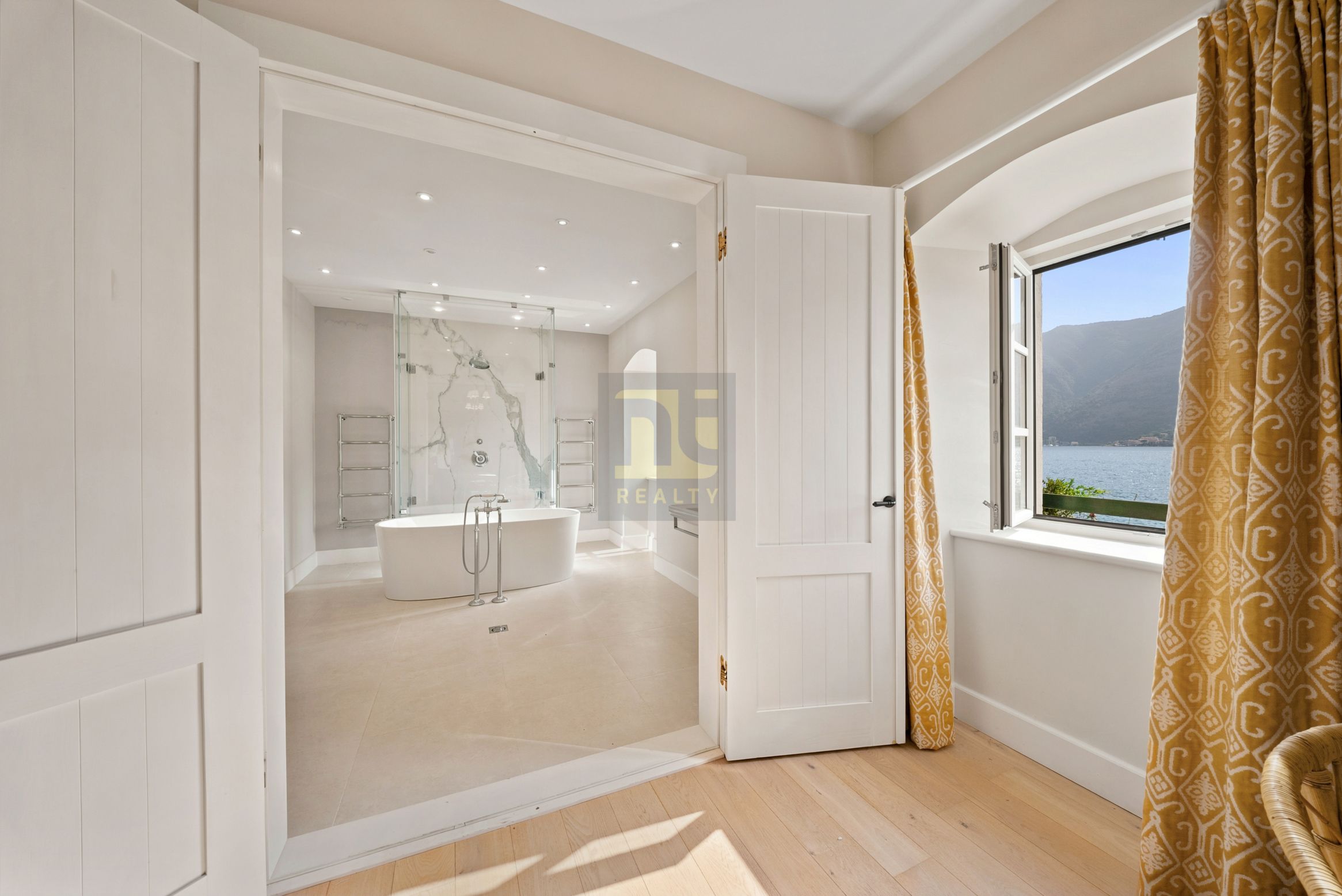
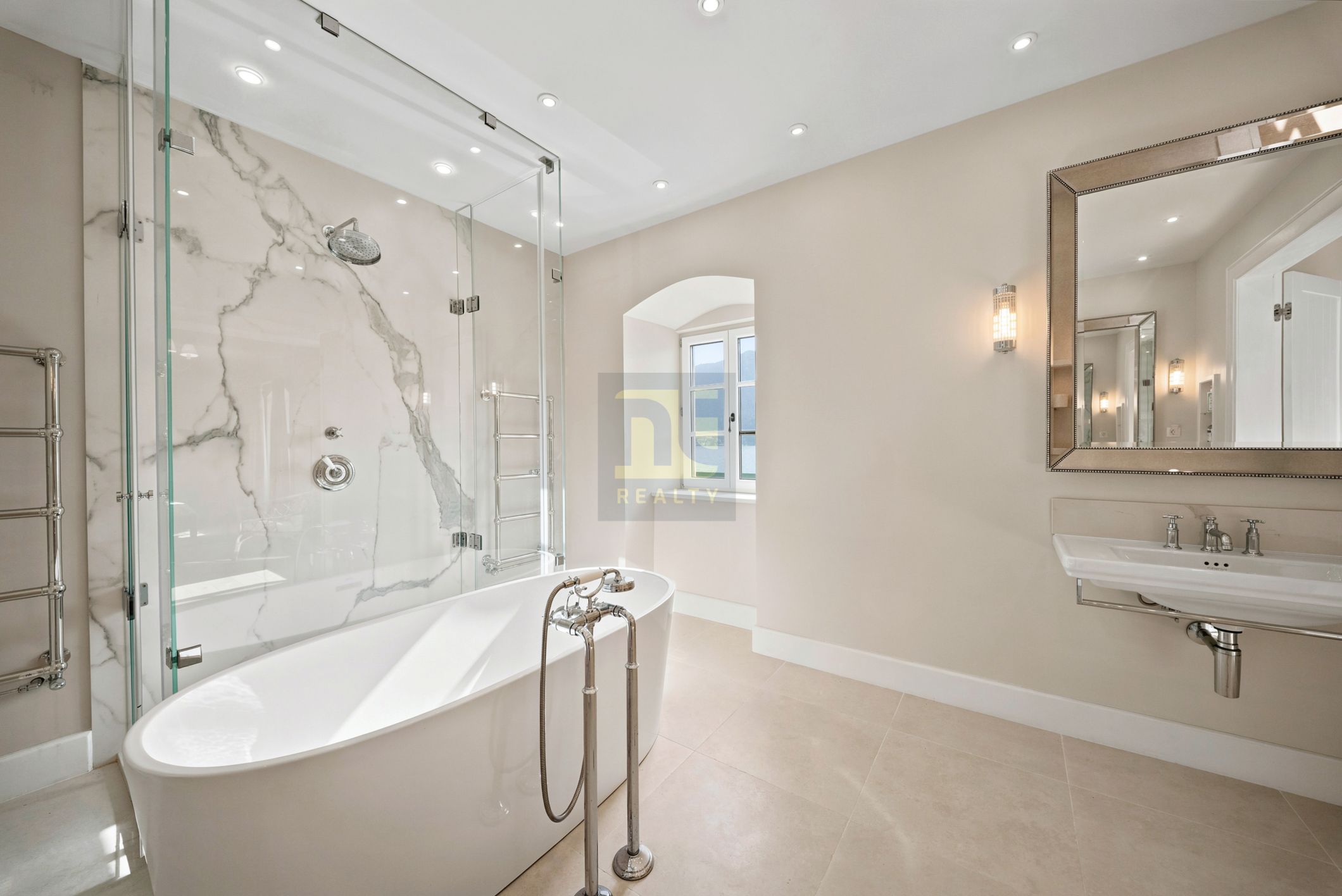
The first floor is given over entirely to the principal suite. The master bedroom faces the front of the villa, with garden views beyond; the en suite bathroom is generous by any standard — a freestanding tub and a separate glass-enclosed shower arranged alongside his-and-hers sinks, with its own separate WC. Behind the bedroom, a large walk-in wardrobe currently doubles as a home gym — an exercise bike is set up here — and could just as easily revert to storage alone or additional closet space. A guest WC for the wider house completes the floor.
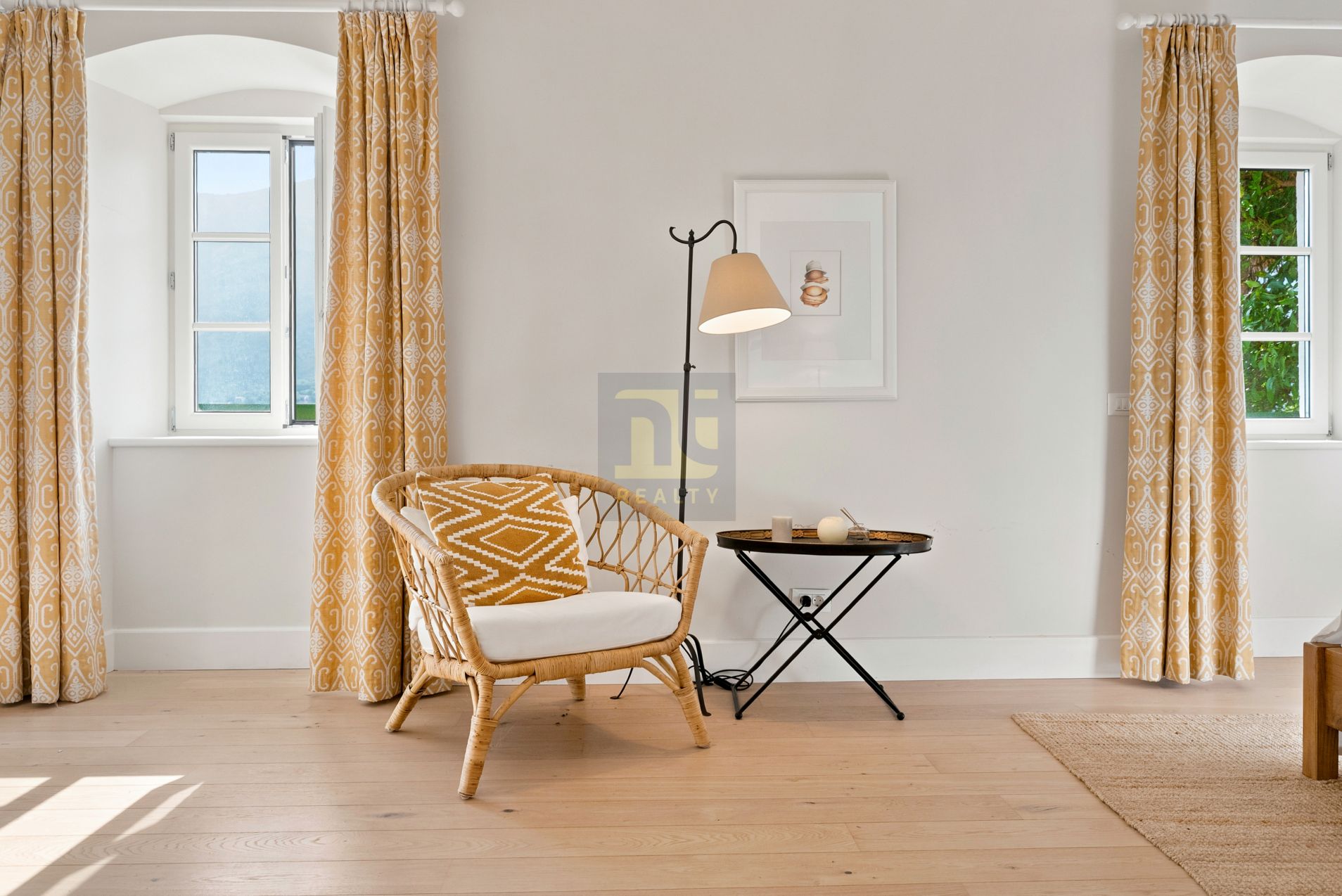
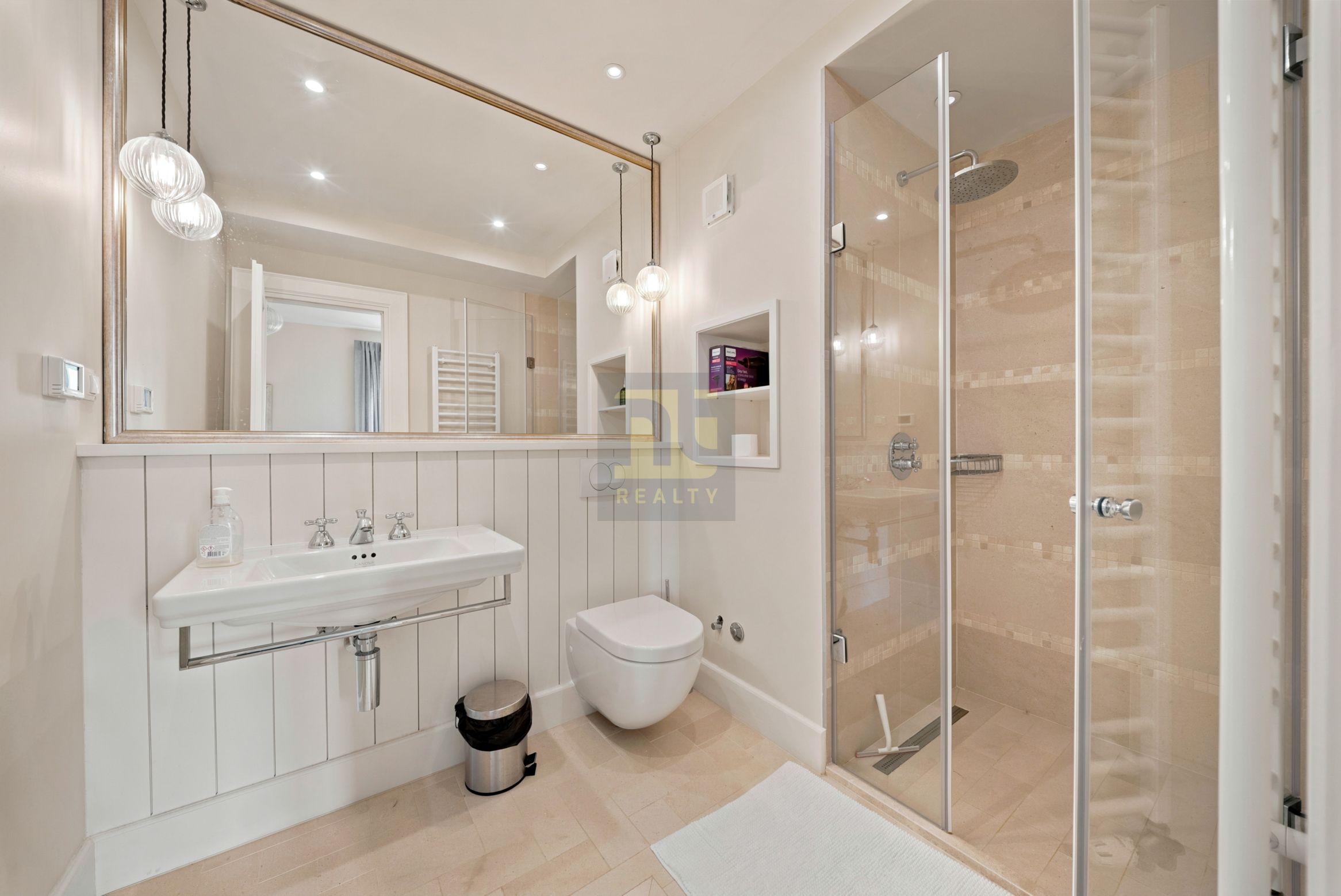
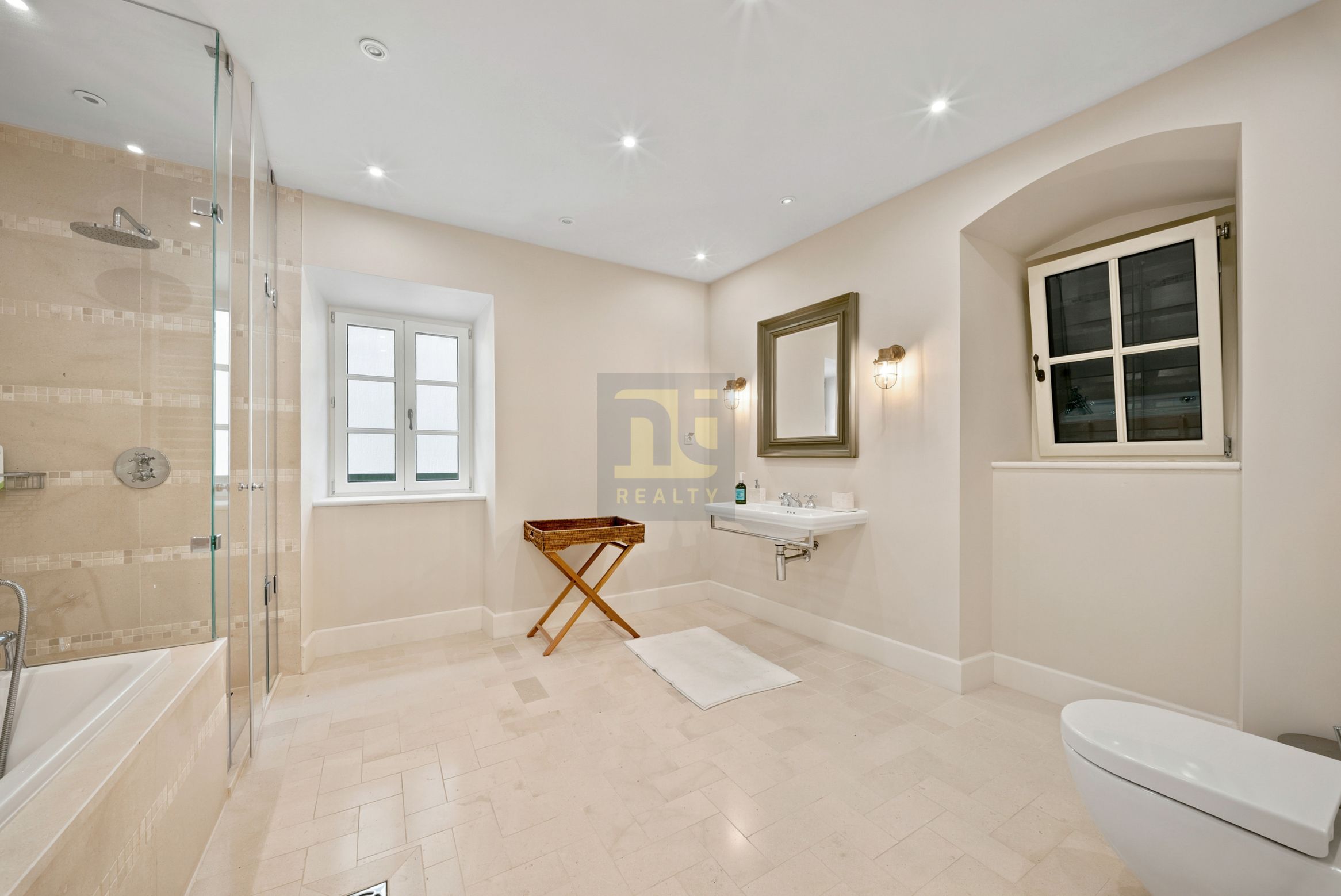
On the second floor, two further bedrooms each have their own bathroom — one finished in soft cream and travertine-effect tile with a walk-in shower, the other similarly appointed with a full bath. A laundry room on this floor keeps the practical side of the house off the ground floor entirely.
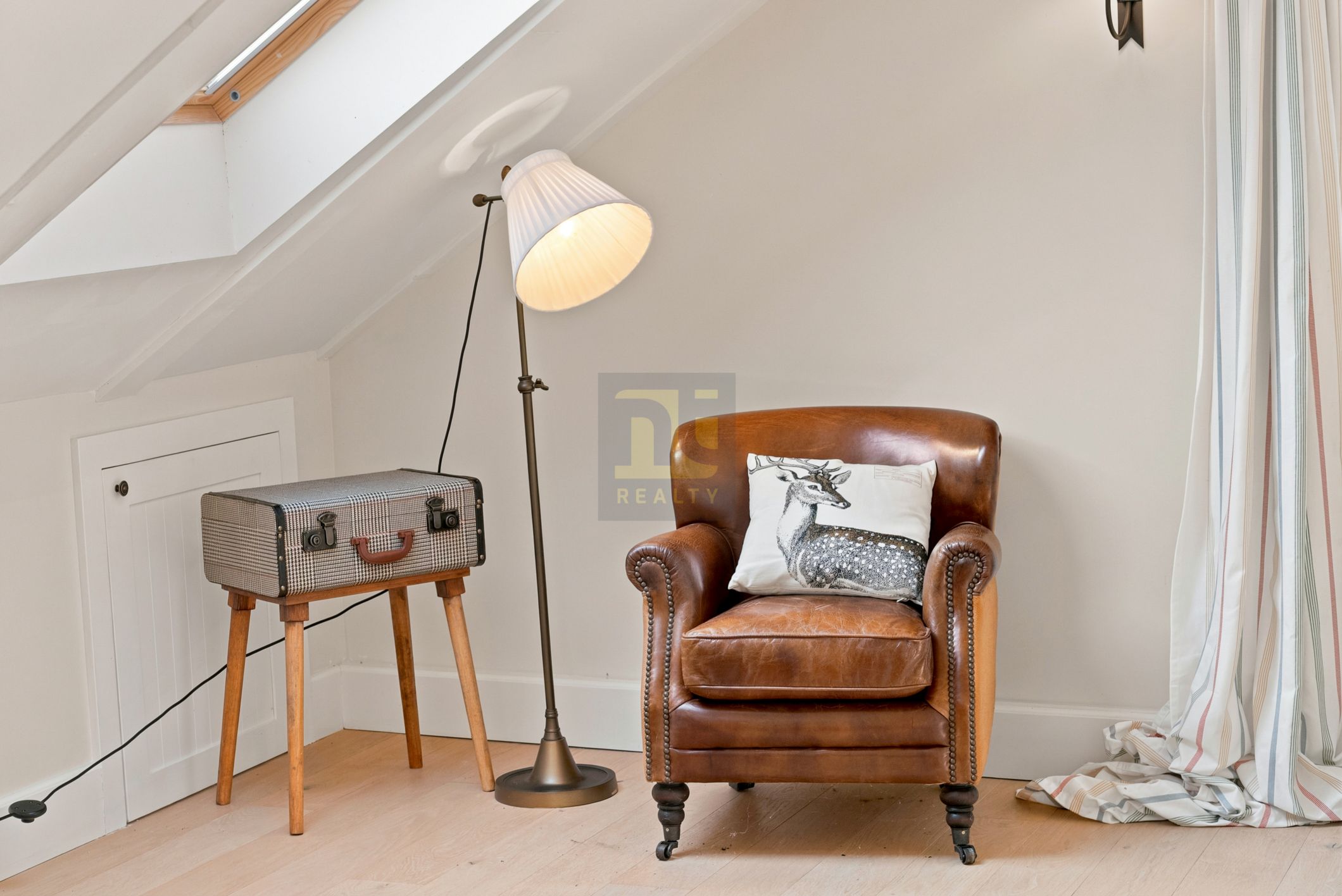
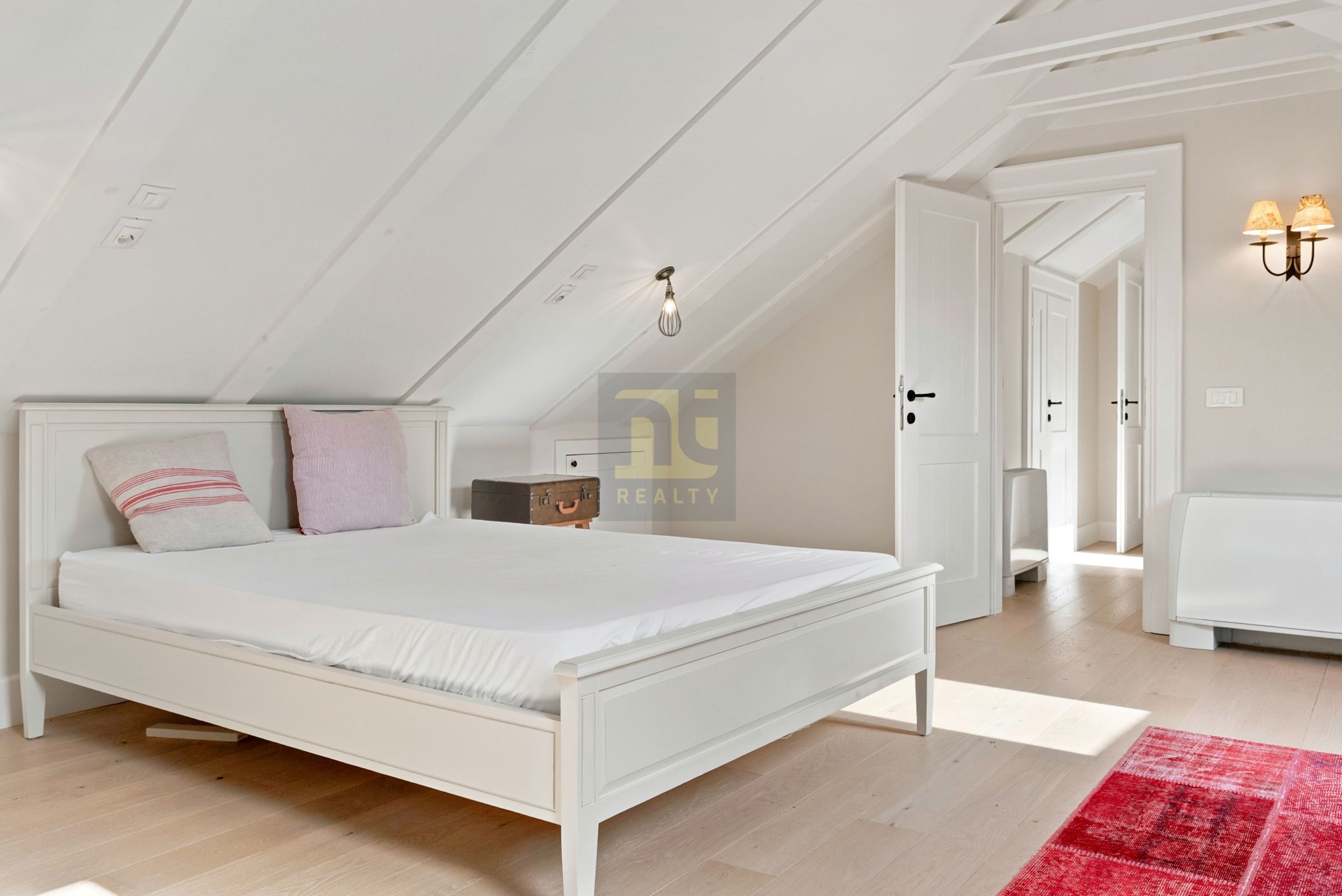
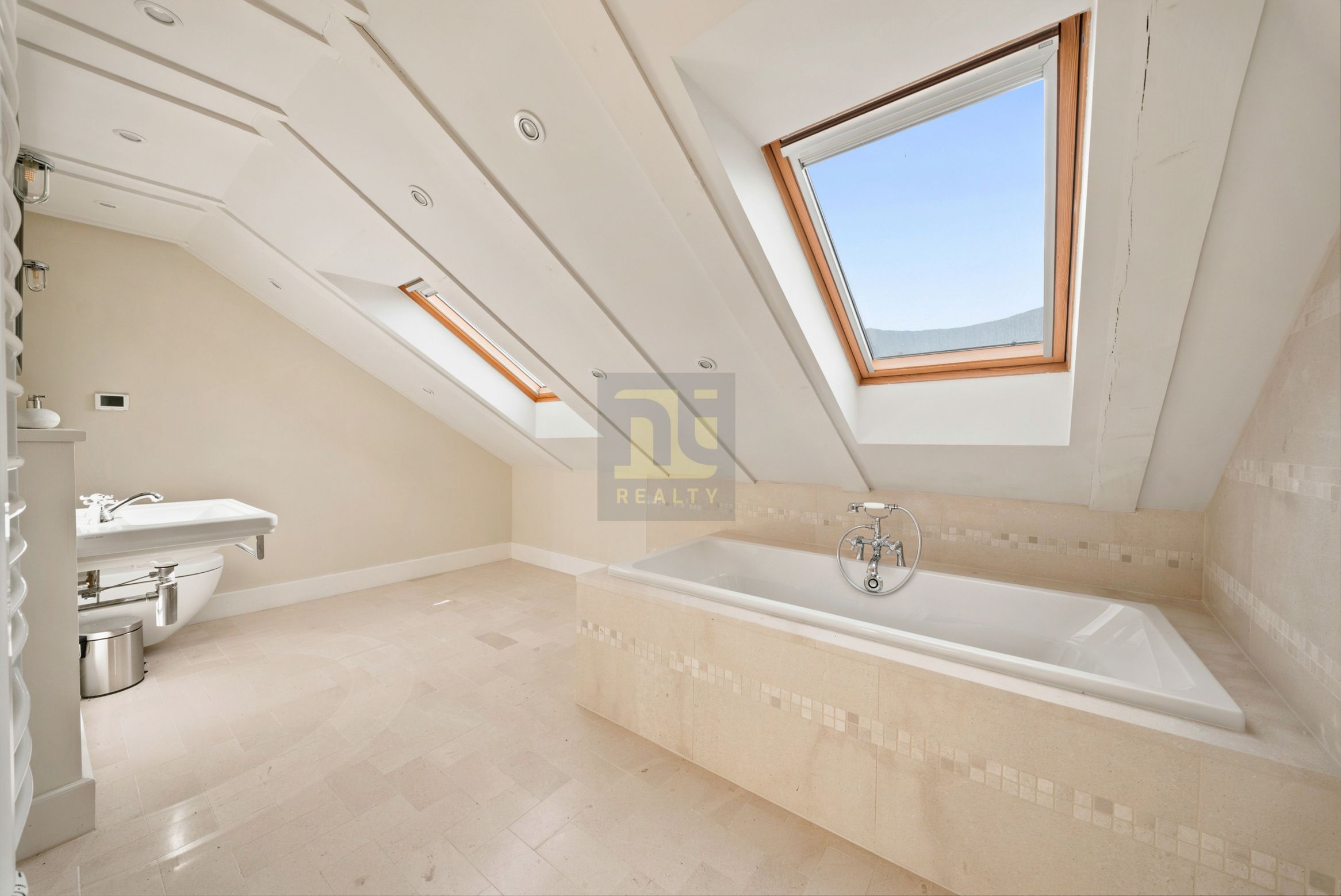
The attic is the most characterful room in the house: an en suite bedroom under the roofline, exposed timber trusses overhead, skylights bringing in direct light, and a run of built-in storage tucked into the eaves. The attached bathroom continues the theme — a sunken tub set into the slope of the roof, a separate shower, and its own skylight.
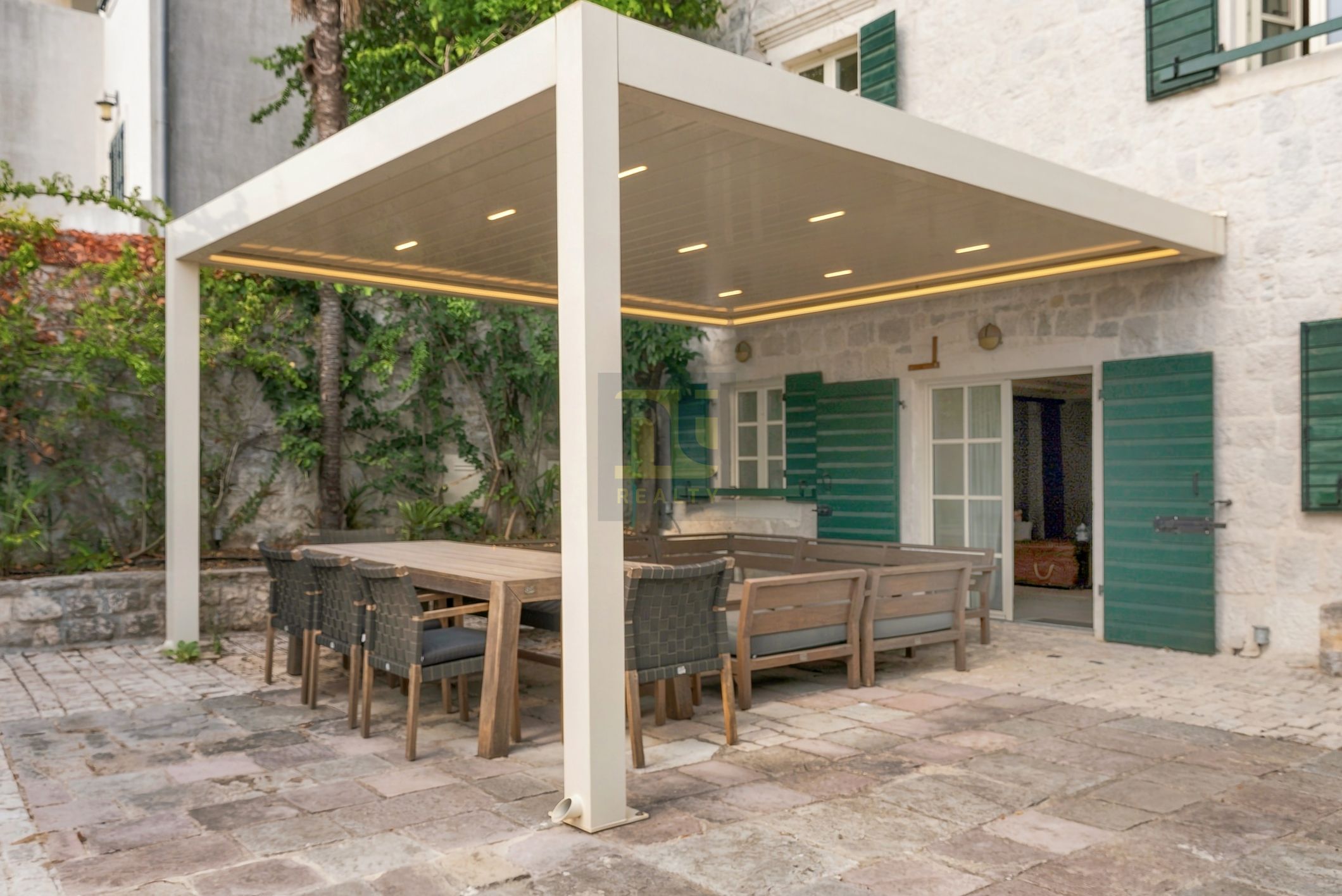
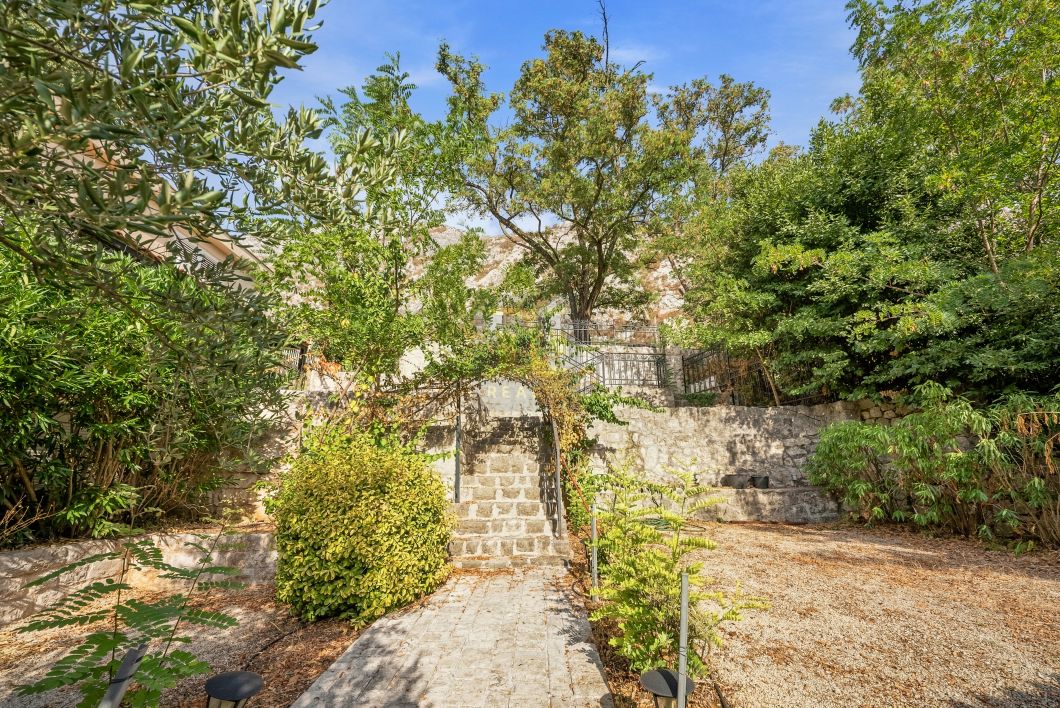
Outside, the plot works as two distinct spaces. The front courtyard faces the sea directly, with a retractable pergola shading a seating area and dining table, iron gates opening straight onto the water — this is where the house is actually lived in through the warmer months. There is a mooring point at the water's edge here; formal use of it requires a concession from Morsko Dobro, the state body responsible for managing Montenegro's coastal zone, which has not yet been secured, so a buyer should treat it as a next step to pursue rather than an existing right. A second, rear courtyard is reached from the main coastal road, wrapped in stone walls, with its own covered pergola and dining set, and doubles as the arrival point for the three parking spaces. A trampoline and cobbled side yard suggest a house that already works well for a family with children.
This is a turnkey proposition rather than a project — a four-bedroom family house or a two-family compound, already renovated and furnished, with genuine drive-in first-line access in a location most buyers spend years trying to find.
Key Features
- First-line waterfront stone villa in Dobrota, formed from two combined stone captain's houses, with drive-in access from the main coastal road — rare on this stretch, where most first-line properties depend on the narrow lower road
- 490 m² gross / 274 m² residential across three floors plus attic; 500 m² plot
- Four bedrooms, all en suite, plus a separate guest WC; principal suite occupies the entire first floor, with a large walk-in wardrobe
- 100 m² sea-facing terrace off open-plan kitchen, living, and dining room
- Mooring point at the water's edge — use subject to a concession from Morsko Dobro, not yet secured
- Fully renovated and furnished throughout, original stone and beam details preserved
- Air conditioning throughout
- Two private courtyards — sea-facing front terrace with retractable pergola, walled rear terrace with covered dining pergola
- Three off-street parking spaces, accessed from the main coastal road
- Kotor Old Town 4.1 km; Tivat Airport 12 km; Porto Montenegro 16 km
What Sets It Apart
Waterfront position is not unusual in Dobrota — much of the village sits directly on the bay. What is unusual is arriving from the main road and walking straight in, rather than threading the narrow lower coastal road that most first-line properties here rely on for access — the result of an English developer buying two adjoining stone houses and redesigning the interior as one home rather than adapting a single structure. Add three off-street parking spaces, at a premium along this stretch of coast, and a fully renovated, furnished interior ready to move into, and the practical case is stronger than most comparable waterfront houses can make. The mooring point at the water's edge is a further point of interest, though formal use of it would need to be established with Morsko Dobro before a buyer should rely on it.
Buyer Lens
A family wanting a serious, move-in-ready base directly on the water within walking distance of Kotor Old Town, who values the convenience of driving straight to the door rather than the usual first-line compromise on access. Also suited to a buyer wanting a genuinely private principal suite — the whole first floor is master bedroom, bathroom, and dressing room — or a boat owner willing to pursue formal mooring rights through Morsko Dobro. Not the right property for a buyer wanting a garden to dig into or a swimming pool — the two courtyards are for sitting and dining, not for planting.
Local Amenities
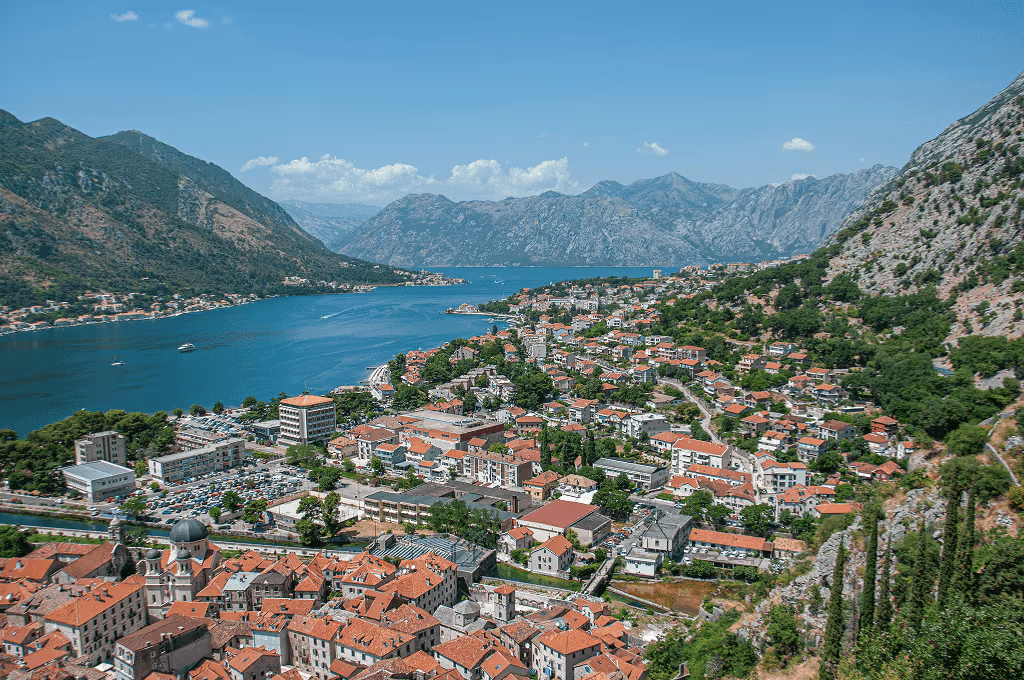
Dobrota is Kotor municipality's largest settlement, a ribbon of captains' houses and stone palaces running some 8 km along the bay between the Old Town walls and the village of Ljuta. It has always been a place people live rather than simply visit — the daily rhythm here is bakeries, small grocers, and waterfront cafés rather than tourist strip, even as a handful of boutique hotels have opened along the shore in recent years. The village thins out toward its northern end, where this property sits, giving a quieter, more residential feel than the sections closer to Kotor.
On foot
- Pekara AS (bakery, open until midnight): ~1 km / 13 min
- City supermarket: ~1.1 km / 14 min
- Dental Studio Vučetić: ~1.2 km / 15 min
- Bonazza — highly rated seafood restaurant, waterfront terrace: ~1.3 km / 16 min
- Ponta Caffe — waterfront café, local favourite for sunset: ~1.35 km / 17 min
- Portun — excellent fish restaurant, an easy 19-minute stroll along the coast and a natural choice for an evening out on foot
Medical
- Medicor Pharmacy / Apoteka Dobrota: ~2.1 km
- Medical Centre Kotor: ~2.1 km
- Dental Studio Vučetić (also listed above, on foot)
Schools
- Osnovna Škola Narodni Heroj Savo Ilić (state primary): ~1.9 km
- Gimnazija Kotor / Secondary Maritime School: ~2.3 km
By car
- Sandrela Pekara — well-loved bakery, krempita a local favourite: 2 km
- Restaurant Mondo and MilicaMica Restobar — waterfront dining toward the Old Town: 2.7 km
- Virtu — beach bar
- Moments — restaurant
- Dobrotski Dvori — a genuine locals' favourite
- Forza Terra (La Bistecca) — 5-star boutique hotel with fine dining on organic Montenegrin meat and fish, waterfront
- Marina Kotor: 3.7 km
- Kotor Old Town: 4.1 km
- Tivat Airport (TIV): 12 km
- Porto Montenegro: 16 km
- Dubrovnik Airport (DBV): 73 km — border crossing, allow extra time in season
- Podgorica Airport (TGD): 83 km
Public transport
Local buses on the Kotor–Tivat coastal route run along the road directly in front of the property; flag down at the roadside, cash fare to the driver.
Agent's Honest Take
I have sold a lot of Dobrota waterfront over the years, and access is the detail buyers underestimate until they own it. Most first-line houses along this stretch mean fighting the narrow lower road every time you bring in shopping or guests; this one lets you drive straight to the door and walk down. Add a renovation that has actually been finished — not staged for photographs and left half-done behind the scenes, and shaped by a developer who bought both neighbouring houses so he could design the whole layout properly rather than patch one building — and three parking spaces where most neighbours have none, and you have a house that is genuinely ready to move into rather than a promising shell. There is a mooring point at the water's edge too, which is a real point in the property's favour, but a buyer should go in understanding that formal use of it still needs to be agreed with Morsko Dobro, the state body that manages Montenegro's coast — it is potential, not a guarantee. The village itself is quietly confident: close enough to Kotor Old Town to walk it on a good evening, far enough along the bay to feel like a residential address rather than a tourist one. For a buyer who wants a finished house with genuine first-line convenience, and is happy to pursue the mooring as a next step rather than assume it, this is about as complete a case as Dobrota makes.
NT Realty is a boutique real estate agency based in Tivat, Montenegro. Founded by Peter Flynn, who first came to the Bay of Kotor in 2005 as a property investor and has since built businesses across real estate development, architecture, and interior design, the agency is run alongside Maša Flynn — architect and former Head of Design at Porto Montenegro, where she delivered over €60 million of projects on time and on budget. Between them they bring a depth of local market knowledge that is difficult to find elsewhere in the region.
The team specialises in properties for sale and long-term rentals across the Bay of Kotor, Tivat Bay, and the Luštica Peninsula — from Porto Montenegro and Luštica Bay to private homes throughout the wider region. Our job is to guide buyers, sellers, and tenants through the process clearly, honestly, and without unnecessary complexity.
Map
Neighbourhood Guide
Explore Kotor
Learn More about living in Kotor: Things to Do and See in Kotor
Frequently Asked Questions

After purchase and registration, you'll receive keys and take possession. Next steps include transferring utilities to your name, setting up building management payments if it's an apartment, getting home insurance, and—if you're renting it out—registering for tourist tax and obtaining any required permits. Your lawyer or agent can guide you through the administrative bits.
Rental income is taxed at 15% on gross receipts if you're renting short-term (tourist rentals), or you can opt for taxation on net income after expenses for long-term rentals. You'll also pay municipal tourist tax (€1 per night per guest in high season, €0.50 in low season) and need to register your rental with the tax authorities and tourism directorate.
Annual property tax is quite low—just 0.25% of the property's assessed value per year. The assessed value is typically well below market value, so you might pay €200-500 annually on a coastal apartment worth €200,000. It's collected by your local municipality and is one of Montenegro's more affordable ongoing costs.
Notary fees are set by official tariff and scale with your purchase price. For most residential properties, expect €350-€1,000 plus 21% VAT—so roughly €423-€1,210 total. A €250,000 property runs about €532 in base fees. There are also small charges for document copies and administrative filing, so your final notary bill might be slightly higher.
For resale properties, you'll pay 3% Real Estate Transfer Tax (RETT) on the purchase price. New builds from developers are zero-rated for RETT but include 21% VAT in the price—though developers can usually reclaim this VAT. Either way, budget around 3% of the purchase price for transfer taxes unless it's a new build where VAT is already included.
The notary doesn't receive or hold the money directly. Instead, the seller must confirm in writing to the notary that they've received the full purchase price. Only after the notary receives this written confirmation (and verifies tax obligations are met) will they issue the Clausula Intabulandi. Some transactions use bank confirmations for added security.
Yes, if you're married or in a registered partnership, you typically need your spouse's or partner's written consent to sell property in Montenegro, even if the property is registered solely in your name. This protects both parties' interests under matrimonial property rules. Your notary will confirm the specific requirements for your situation.
The Clausula Intabulandi is the notary's official confirmation that all legal and financial obligations have been met, allowing the property to be registered in your name. The notary issues it only after verifying you've paid the full price and all taxes. It's your green light for cadastre registration—without it, you can't become the legal owner.
Every property and owner has specific numbers that appear on contracts: your JMBG (personal ID), the seller's JMBG or company registration, and the property's cadastral parcel number (katastarska parcela/čestica). These link everything in the official registries and are essential for registration and tax purposes.
No, Montenegro doesn't have a title insurance system like the US or UK. Instead, buyers rely on comprehensive legal due diligence—your lawyer or notary checks the cadastre, ownership history, encumbrances, and permits before you commit. It's a different system, but with proper checks it's just as secure.
It depends on where your documents were issued. If you're from a Hague Convention country (which includes most Western countries), you need an apostille. If not, your documents need consular legalisation. Either way, they'll also need certified translation by a sworn court translator in Montenegro.
Your lawyer requests an official extract (List nepokretnosti) from the Real Estate Cadastre, which shows current ownership, any mortgages or liens, property boundaries, and legal description. The notary also verifies the seller's identity and legal capacity. This due diligence typically takes a few days and costs around €18-25 for the cadastre extract.
You obtain a JMBG through the local Police Directorate (MUP) by presenting your passport, proof of property ownership, and completing a simple application. The process typically takes a few days, and you'll need this number for tax declarations and property registration—even without residency.
For a straightforward resale apartment with clean paperwork, the buying process can often be completed within 3-6 weeks. More complex transactions, new builds, or mortgage-financed purchases can take longer.
Some banks do lend to foreigners, but conditions are tighter—lower loan-to-value ratios and stricter income requirements. Many foreign buyers finance through their home country or pay cash.
Officially, everything is in euros. You can convert from your home currency before sending, or in some cases settle using cryptocurrency if both parties and the notary agree—but the contract price and taxes are always euro-based.
Beyond the purchase price and transfer tax, budget for notary fees, translation, legal fees, and potentially agency commission—together, these typically add 2-4% to your total cost.
No. Most foreign buyers use a Power of Attorney to authorize someone here—your lawyer, NT Realty, or another trusted representative—to sign on your behalf.
By convention, the buyer usually pays both the notary fees and the sworn court translator fees, though this can be negotiated between parties.
Yes, and it's more straightforward than most people expect. Montenegro welcomes foreign buyers—both EU and non-EU—and you can own property in your own name without needing residency or a local company in most cases.
Disclaimer: Purchase Costs & Information Accuracy
All costs associated with the purchase, including notary fees, real estate transfer tax (if applicable), and any legal fees, are the sole responsibility of the buyer. ntRealty bears no responsibility for the correctness of the information published here, which is based exclusively upon details provided to us by the property owner(s). ntRealty has no obligation to update, modify, or amend this listing or to notify a reader if any information, including urbanistic or cadastral data, subsequently becomes inaccurate. All listings are subject to prior sale. Agency Commission: No agency commission is charged to the buyer. The agency fee is paid by the seller.
Similar Properties


Get Montenegro real estate updates directly in your inbox.
Are you interested in buying a home? Look no further than working with our real estate experts.