
.avif)
.avif)
.avif)
.avif)

.avif)
.avif)
.avif)
.avif)
Stone House with Bay Views in Gornja Lastva, Tivat
€190,000

Peter Flynn
Features
Explore in 3D
Guided Video Tour
In Brief
A two-storey traditional stone house of 103 m² in Gornja Lastva, a protected hillside settlement at approximately 300 metres above the Bay of Kotor on the Vrmac peninsula, with clear bay views to Porto Montenegro from the upper floor. The property is in original condition throughout and requires full renovation. The combined plot of approximately 347 m² includes a 27 m² ruined structure and an adjacent 109 m² agricultural parcel with olive trees; the plot boundary extends to the village access road, giving the unusual advantage of off-road parking within the curtilage. Planning documentation (Urban Technical Conditions) supports reconstruction and extension across three levels — ground floor, first floor, and attic buyers should confirm the precise buildable parameters with the municipality and a qualified architect. A concept design is available. Water via cistern; electricity connectable; no mains sewage. Porto Montenegro 5.2 km/ 14 min; Tivat Airport 13 km / 26 min; Kotor Old Town 16 km / 33 min. €190,000.
Description
Gornja Lastva is not easy to find, and most people never do. That is, in part, the point. Perched on the southern slopes of Vrmac at around 300 metres — the ridge that divides Kotor Bay from Tivat — the village sits above and behind both towns without quite belonging to either. The lanes are stone. The walls are stone. The houses, most of them, are stone and centuries old, built in the manner the UTU describes with evident respect: suhozid construction, dry-laid without mortar, the walls thick enough to hold the cold in summer and the warmth against a Bora wind. What the village does not have is a supermarket, a café, or a post office. What it does have — what has drawn architects, preservationists, and an increasing number of buyers from across Europe — is a position, a silence, and a quality of light that the coast below has largely traded away.
This house sits within metres of the Church of the Nativity of the Virgin Mary, built in 1410 and now, on summer evenings, the setting for jazz and blues concerts and moonlit classical performances. Beside it, the Church of Sveti Vid dates to 1327. The adjacency is not incidental. The property sits within the oldest layer of the village fabric, and from its upper floor the view opens clearly across the tree line to the bay and the masts of Porto Montenegro fourteen minutes below.
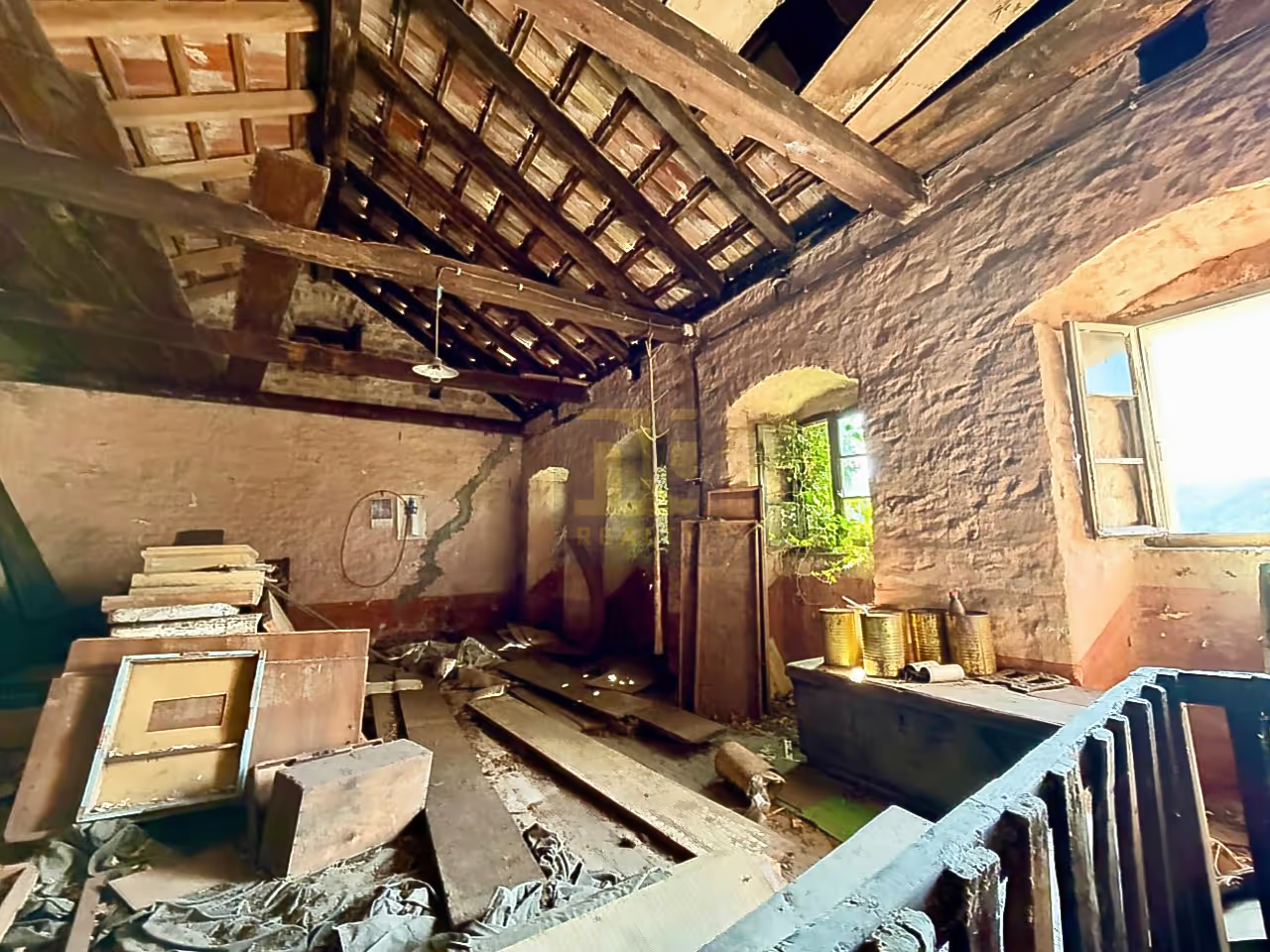
The house itself is two storeys of solid stone construction — ground floor and first floor — in original condition. The walls are thick, structurally sound, and built in the Boka manner: rough-hewn local limestone, jointed and massive. The roof structure is exposed timber with terracotta tile. Arched stone openings, green-painted wooden double doors at ground level, shuttered windows above, and a facade half-covered with ivy give the exterior the character the village promises: cleared and pointed, with climbing roses trained up the stonework, this becomes exactly the picture postcard cottage Peter describes. The interior is unfinished in every sense — the building has not been lived in for some years, there are contents to clear, and everything from floor to roof requires attention. None of this is concealed. A buyer comes to this property for its bones and its position, not its condition.
Behind the house, at the top of the plot, the land reaches the village access road. In most of Gornja Lastva, you park where you can and walk. Here, the plot boundary at road level creates the possibility of secure off-road parking within the curtilage — confirmed in the architect’s concept drawings and visible in the renders as a car parked at road level with steps descending to the house. In a protected village where new access points cannot simply be engineered, this is a practical advantage that does not appear on most comparable plots.
The planning documentation — Urban Technical Conditions issued by the Municipality of Tivat — supports reconstruction and extension of the existing house across three levels. An architect has already been engaged and a concept design produced, showing the extended house with dormer windows at attic level, a glazed veranda and solarium inserted at the intermediate terrace, and a separate roofed auxiliary structure on the lower agricultural terrace. The UTU parameters are the governing document for any reconstruction programme and should be confirmed with the municipality — and with a qualified architect reviewing the issued conditions — before any planning decisions are committed to. The planning designation — Prošireni dom — explicitly permits use as a family residence, tourist guest accommodation, or a combination of both.
The lower parcel is agricultural land with established olive trees. Water is managed via a bistjerna, the traditional stone rainwater cistern integral to almost every historic Boka property, supplemented by tanker delivery as needed. The system is standard for Gornja Lastva and, correctly maintained, serves year-round. Mains sewage is not available; a biological treatment unit will be required. Electricity is connectable via the standard municipal procedure.
One title point requires attention before exchange: one of the sub-parcels comprising the combined cottage plot showed multiple co-owners in the 2021 land register extract. The seller's listing presents the title at 1/1, which may reflect a subsequent consolidation; a buyer's lawyer should verify the current position on this parcel independently before proceeding.
The Vrmac ridge trail, regarded as one of the finest coastal walking routes in Montenegro, is accessible directly from the village on foot. The village comes briefly and warmly to life each August for the Festivities of Lastva — music, food, and the particular satisfaction of a place that has not forgotten what it is. For eleven other months, it is quiet in the way that has become genuinely difficult to find.
Key Features
– Two-storey traditional stone house, 103 m², in original condition — full renovation required throughout
– Plot of approximately 347 m² total, including 27 m² ruined outbuilding and 109 m² agricultural parcel with olive trees
– Plot boundary reaches village access road — off-road parking within curtilage, unusual in Gornja Lastva
– UTU supports reconstruction across three levels (P+1+attic); Prošireni dom designation permits residential and tourist use
– 18 m² auxiliary structure permitted on lower agricultural parcel
– Architect engaged; concept design and 3D renders available
– Bay views to Porto Montenegro from upper floor
– Adjacent to Church of the Nativity of the Virgin Mary, 1410 — summer jazz, blues, and moonlit classical concerts
– Water via traditional bistjerna cistern; electricity connectable; biological treatment unit required for sewage
What Sets it Apart
Properties in Gornja Lastva reach the market rarely. When they do, they are either fully renovated — at a price that reflects completed work rather than unrealised potential — or they lack road access and the functional parking that makes year-round occupation viable. This one is neither. The plot reaches the access road, the parking case is confirmed in the architectural drawings, and the planning documentation supports expansion to a three-level house with tourist use permitted alongside residential. At €190,000 the price is a direct reflection of the condition and the work ahead — not of the position, which is among the most distinctive in any protected village above the Bay of Kotor, and which a finished version of this property would not offer anywhere near this figure.
Buyers Lens
A buyer with a serious appetite for renovation in one of Montenegro’s most architecturally significant village settings, with a separate budget for the work and the patience to do it properly. The planning designation supports eventual use as a boutique guest house or holiday rental as well as a private residence. Not suited to anyone seeking a turnkey finish, a property within walking distance of daily amenities, or coastal living without car dependency.
Local Amenities
Gornja Lastva is a settlement, not a village in the service sense. There is no shop, no café, no pharmacy, no post office — and there has not been for decades. What it has instead is something increasingly scarce on the Montenegrin coast: genuine quietness, a protected architectural fabric, olive groves, dry-stone walls, and a position on the Vrmac ridge with views that reach to the open Adriatic on a clear day. The Church of the Nativity of the Virgin Mary, built in 1410 and a few steps from the property, is the heart of the settlement and, in summer, the setting for jazz and blues evenings and moonlit classical concerts that draw visitors up from Tivat and beyond. The Vrmac ridge trail is accessible on foot from the village and is regarded as one of the finest coastal walking routes in the country. Everything else — groceries, restaurants, pharmacies, schools — is in Tivat or Porto Montenegro, both within fifteen minutes by car.
In Gornja Lastva — on foot
– Church of the Nativity of the Virgin Mary (Male Gospa), 1410: ~50 m / 1 min — summer jazz, blues, and moonlit classical concerts
– Church of Sveti Vid, 1327: within the settlement — short walk
– 19th-century olive mill: within the settlement
– Vrmac ridge trail: accessible directly on foot
By car
– Porto Montenegro: 5.2 km / 14 min
– Tivat town centre: approximately 10 min (en route to Porto Montenegro)
– Tivat Airport (TIV): 13 km / 26 min
– Kotor Old Town: 16 km / 33 min
– Dubrovnik Airport (DBV): 49 km / 1 hr 29 min — border crossing; allow additional time in season
– Podgorica Airport (TGD): 95 km / 2 hr 6 min
Public transport
None serving Gornja Lastva directly. A car is essential for daily life.
Agents Honest Take
Gornja Lastva is one of a very small number of village settings in the Bay of Kotor that serious buyers and architects argue about. The position, the protected fabric, and the proximity to Tivat put it in a different conversation from most hillside properties — and buildings here come to market so rarely that the question, when they do, is simply whether a buyer can see past the condition to what is underneath. This one has good bones: thick stone walls, solid structure, a plot that reaches the road, planning documentation that supports genuine expansion, and a view from the upper floor that will not be built out.The work is substantial and the budget for it must be taken seriously from the outset — water system, biological treatment, roof, all three floors, and the auxiliary building if the lower parcel is to be developed. But a position like this at €190,000 is not something the market offers twice. A buyer who goes in with clear eyes, engages a good local architect and a reliable builder, and is prepared to be patient will end up with something that Gornja Lastva simply does not give away again
NT Realty is a boutique real estate agency based in Tivat, Montenegro. Founded by Peter Flynn, who first came to the Bay of Kotor in 2005 as a property investor and has since built businesses across real estate development, architecture, and interior design, the agency is run alongside Maša Flynn — architect and former Head of Design at Porto Montenegro, where she delivered over €60 million of projects on time and on budget. Between them they bring a depth of local market knowledge that is difficult to find elsewhere in the region.
The team specialises in properties for sale and long-term rentals across the Bay of Kotor, Tivat Bay, and the Luštica Peninsula — from Porto Montenegro and Luštica Bay to private homes throughout the wider region. Our job is to guide buyers, sellers, and tenants through the process clearly, honestly, and without unnecessary complexity.
Map
Neighbourhood Guide

Explore Tivat
Learn More about living in Tivat: Things to Do and See in Tivat
Frequently Asked Questions

After purchase and registration, you'll receive keys and take possession. Next steps include transferring utilities to your name, setting up building management payments if it's an apartment, getting home insurance, and—if you're renting it out—registering for tourist tax and obtaining any required permits. Your lawyer or agent can guide you through the administrative bits.
Rental income is taxed at 15% on gross receipts if you're renting short-term (tourist rentals), or you can opt for taxation on net income after expenses for long-term rentals. You'll also pay municipal tourist tax (€1 per night per guest in high season, €0.50 in low season) and need to register your rental with the tax authorities and tourism directorate.
Annual property tax is quite low—just 0.25% of the property's assessed value per year. The assessed value is typically well below market value, so you might pay €200-500 annually on a coastal apartment worth €200,000. It's collected by your local municipality and is one of Montenegro's more affordable ongoing costs.
Notary fees are set by official tariff and scale with your purchase price. For most residential properties, expect €350-€1,000 plus 21% VAT—so roughly €423-€1,210 total. A €250,000 property runs about €532 in base fees. There are also small charges for document copies and administrative filing, so your final notary bill might be slightly higher.
For resale properties, you'll pay 3% Real Estate Transfer Tax (RETT) on the purchase price. New builds from developers are zero-rated for RETT but include 21% VAT in the price—though developers can usually reclaim this VAT. Either way, budget around 3% of the purchase price for transfer taxes unless it's a new build where VAT is already included.
The notary doesn't receive or hold the money directly. Instead, the seller must confirm in writing to the notary that they've received the full purchase price. Only after the notary receives this written confirmation (and verifies tax obligations are met) will they issue the Clausula Intabulandi. Some transactions use bank confirmations for added security.
Yes, if you're married or in a registered partnership, you typically need your spouse's or partner's written consent to sell property in Montenegro, even if the property is registered solely in your name. This protects both parties' interests under matrimonial property rules. Your notary will confirm the specific requirements for your situation.
The Clausula Intabulandi is the notary's official confirmation that all legal and financial obligations have been met, allowing the property to be registered in your name. The notary issues it only after verifying you've paid the full price and all taxes. It's your green light for cadastre registration—without it, you can't become the legal owner.
Every property and owner has specific numbers that appear on contracts: your JMBG (personal ID), the seller's JMBG or company registration, and the property's cadastral parcel number (katastarska parcela/čestica). These link everything in the official registries and are essential for registration and tax purposes.
No, Montenegro doesn't have a title insurance system like the US or UK. Instead, buyers rely on comprehensive legal due diligence—your lawyer or notary checks the cadastre, ownership history, encumbrances, and permits before you commit. It's a different system, but with proper checks it's just as secure.
It depends on where your documents were issued. If you're from a Hague Convention country (which includes most Western countries), you need an apostille. If not, your documents need consular legalisation. Either way, they'll also need certified translation by a sworn court translator in Montenegro.
Your lawyer requests an official extract (List nepokretnosti) from the Real Estate Cadastre, which shows current ownership, any mortgages or liens, property boundaries, and legal description. The notary also verifies the seller's identity and legal capacity. This due diligence typically takes a few days and costs around €18-25 for the cadastre extract.
You obtain a JMBG through the local Police Directorate (MUP) by presenting your passport, proof of property ownership, and completing a simple application. The process typically takes a few days, and you'll need this number for tax declarations and property registration—even without residency.
For a straightforward resale apartment with clean paperwork, the buying process can often be completed within 3-6 weeks. More complex transactions, new builds, or mortgage-financed purchases can take longer.
Some banks do lend to foreigners, but conditions are tighter—lower loan-to-value ratios and stricter income requirements. Many foreign buyers finance through their home country or pay cash.
Officially, everything is in euros. You can convert from your home currency before sending, or in some cases settle using cryptocurrency if both parties and the notary agree—but the contract price and taxes are always euro-based.
Beyond the purchase price and transfer tax, budget for notary fees, translation, legal fees, and potentially agency commission—together, these typically add 2-4% to your total cost.
No. Most foreign buyers use a Power of Attorney to authorize someone here—your lawyer, NT Realty, or another trusted representative—to sign on your behalf.
By convention, the buyer usually pays both the notary fees and the sworn court translator fees, though this can be negotiated between parties.
Yes, and it's more straightforward than most people expect. Montenegro welcomes foreign buyers—both EU and non-EU—and you can own property in your own name without needing residency or a local company in most cases.
Disclaimer: Purchase Costs & Information Accuracy
All costs associated with the purchase, including notary fees, real estate transfer tax (if applicable), and any legal fees, are the sole responsibility of the buyer. ntRealty bears no responsibility for the correctness of the information published here, which is based exclusively upon details provided to us by the property owner(s). ntRealty has no obligation to update, modify, or amend this listing or to notify a reader if any information, including urbanistic or cadastral data, subsequently becomes inaccurate. All listings are subject to prior sale. Agency Commission: No agency commission is charged to the buyer. The agency fee is paid by the seller.
Similar Properties
.jpg)
Get Montenegro real estate updates directly in your inbox.
Are you interested in buying a home? Look no further than working with our real estate experts.